Category Archives: Uncategorized

Bid Day Blitz

Bid day on a competitive hard-bid project can be an exciting experience capped off with a victory or it can be a stressful struggle to just grind out a proposal before the deadline.  Much of what makes the difference is how the subcontractors are bidding.  Well organized, competitive, timely, and concise proposals that cover all the needed scope are a firm building block to a well structured bid.

Luck favors the prepared.

It’s easy to fall into the belief that inviting the same crowd of subcontractors will naturally result in a competitive and complete bid.  Many estimators take it on faith that their subcontractor list is comprehensive until they get caught short on bid day.  It may seem basic but failing to actually define what subcontractor handles which scope is a common reason for lost bids

Not all wire is installed by an Electrician.  Not all glass is a Glazier’s job,  nor is all pipe a Plumbers job.   Not all subcontractors will have a consensus view about what is and what isn’t in their scope of work.  Some carpet firms will install vinyl tile but not Ceramic. Other firms will only install ceramic or wood flooring.  Knowing who does what is a huge advantage to ensuring that all scope items get bid.

Above and beyond this, it’s important to communicate to the subcontractors how you’d like them to bid.  A combination proposal for Carpet and vinyl tile may be lower than the sum of competing carpet and vinyl bids.  It may be tempting to simply accept that combination proposal.

What if there was breakout pricing that showed that the carpet portion was slightly higher than low bid but the vinyl portion was significantly cheaper?  That might be an indicator that the bidder made a mistake.  If upon checking with that bidder its determined their vinyl portion is correct, then greater savings could be realized by hiring them for only the vinyl portion.

High Speed Low Drag

As the deadline approaches, the pressure mounts, and there’s less time to make decisions.  EVERYONE is in a hurry and mistakes are costly.  Consider highway signs for a moment.  They are very easy to read even at high speeds.  They convey enough information to be useful without overloading the driver with data.  Bid templates should be similar;easy to read with many factors automated to reduce errors.  Macro’s in spreadsheets can be immensely helpful.

Bid directives should be brief and to the point.  They should be compartmentalized according to TRADE not just Construction Specification Institute (CSI) division.  Make it easy for your subcontractors to get what they need.  Be especially clear about items that are not furnished by subcontractors.  Plan’s often have a responsibility matrix where “GC” is listed without any further clarification.  Find out BEFORE the bid if vendors are bidding to the GC or to their subcontractors.

As bids come in, they must be scoped.  WRITE DIRECTLY ON THE BID list out questions, or items that should be included.  Then write the answers next to them.  All verbal inclusions should note the time and date of the conversation.  Any verbal answers should have a follow-up written confirmation.  I encourage the use of email to generate time stamped communications.  Be advised that sending an email with all the questions and answers seeking confirmation before the deadline is one means to prove “good faith” effort to allow them time to revise an answer before the bid.

If the estimate was developed properly, it can output a list of scope inclusions in a checklist format for the subcontractors to confirm, decline, or modify dollar amounts accordingly. These are handy to provide proof that the bidder is complete even if their bid is written poorly.

Whether you’re using checklists, or verbal notes transcribed on the proposal show your work.  All amounts need to be properly summed.  A highlighted  rectangle at the upper left corner with the total base bid amount written inside is fast and easy to read.  Alternates should be highlighted in a different color.  Writing the CSI division (per the estimate template) assures that the team leader is entering data in the correct areas.  If a subcontractor proposal has two or more divisions of work then make as many copies.  The bid binder should group bidders by scope of work with the apparent low bidder at the top of each section.

Prioritize, then Divide and Conquer

Depending on the complexity of the project, its common practice for the estimator and staff to set up a “war room” where all members of the team work the phones getting proposals scoped and ready to enter into the bid.  Often the team divides the scope of work by CSI divisions and everyone talks over one another in a rising cacophony as bids make their way to the team leader who enters them into the template.

This overlooks a terrifically important point, not all scopes of work pose the same degree of risk to the GC.  If a scope of work is worth 4% of the project budget and there are three bidders within 5% of one another – there’s very little reason to strenuously review the proposals trying to find something explaining the difference.  Painting contractors come to mind here.

Conversely, a scope of work may be work 20% of the budget and the bidders may range by upwards of 30%.  These are the bids to be worried about because they greatly influence the total AND they represent significant risk by virtue of the spread between bidders.

Therefore the estimate BEFORE subcontractor bids should be used to prioritize the trades.  The team leader must verify that each staff member is observing these priorities because it’s easy to become absorbed in resolving some issue in front of you rather than setting it aside when something more important comes along.

The team leader should also establish a timeline for the bid including  times where key subcontractor bids are complete and ready for inclusion to the estimate.  The team leader is responsible for tracking that these deliverables are met and notifying the appropriate staff when they’re falling behind.

At all times the team leader should be prioritizing, and directing the staff accordingly.  There’s never time to allow a staff member to become overwhelmed.  If incoming bids are higher than previously scoped and entered bids – they should be set aside and ignored.  Do not waste resources scoping high bids.

Estimators with long-standing relationships with their subcontractors may reach a point where they can rely on a trusted subcontractors proposal to be complete and competitive.  This allows the team leader to quickly enter them to the proposal and elect to review competing bids only when there’s sufficient time and reason to believe they’re lower.

Rise above the fray

The “war room” method has a few advantages.  Chief among them is that the team leader has unfettered access to the staff to direct the course of their actions.  It’s an exciting environment that can foster a sense of teamwork and accomplishment.

Depending on the people and technology involved, it can also be a deafening, stifling, and intensely frustrating way to spend a day.  Incessant chatter, ringing phones, people shouting, paper’s rustling, and a team leader barking above it all.  Much of a company’s corporate culture will be on display during such a bid – consider how it appears. Fix what’s broken right away – it may be costing you wins.

Fixing the suck

There are a few things that can be done to make it a success.  Starting with the outside and working in, there’s the subcontractors.  Incomplete, poorly written, or downright irritating proposals generate immense amounts of work for estimating staff.  Regular bidders should get feedback about their proposals.  Don’t be afraid to suggest changes to make it easier to interpret their bid.  Some subcontractors dump six pages of figures on a form and expect your estimators to sum it up.

Bid Day Blitz

 “You do like math don’t you?”


Let them know this is unbecoming and unprofessional.  Buried exclusions are likewise unappreciated in the context of a subcontractor that has an established relationship with your firm.

Subcontractors

Subcontractors that habitually ignore phone calls or emails scoping their bids should hear from you later on.  Get to the root of the issue and make it clear you’re trying to hire them, so they need to act accordingly.  Be advised they might be ducking your calls  if you or your staff habitually waste their time.

Management

Estimators stock in trade comes down to judgment.  Everyone participating in a bid must exercise judgment to the degree they’ve been granted authority.  Not everyone will be as obedient, detailed, or committed as you’d like them to be.  Limiting authority and increasing oversight are the common course correctives used to train a new (or uncertain) employee.

Staff

Without moderation, and steady growth – a dictatorship emerges.  Staff that fear the team leader will seek to sandbag their positions – they will obsess over low risk issues to the exclusion of approving any bids but those that are high.  During the bid these folks spend the majority of their time inventing reasons to be unsure of a bid.  In practice and in effect, they are working against the company.

At the opposite end of the spectrum is an estimator who would commandeer whatever employee’s they can find.  Giving complete authority to unqualified individuals is an oncoming disaster.

Bid Day Blitz

In hindsight, maybe Buster wasn’t the best choice to head up the Henderson bid…

It won’t occur to someone new to the bid environment that it’s OK for there to be some uncertainty.  Estimators are there to exercise judgment to reduce risk.  It’s called an Estimate for a reason, it’s not reasonable to expect perfection.

Effective Communication

Staying with the staff, the next issue is of communication.  The bid day environment is stressful and everyone must race against the clock.  To the subcontractor, your bid may be only one of many they’ve submitted that day.  Interrupting their day is not your birthright, it’s not appropriate to alert them to some unknown condition and expect immediate and comprehensive coverage.  Scoping bids involves a certain amount of estimating what the correct answer to your question will be.  Successful estimators will approach a scoping phone call with kind professionalism.  Suggesting a value for something obviously missing from the scope gives the subcontractor an idea of what you’re getting at and reduces the likelihood that they’ll “have to call you back”.  The staff needs to get results, that’s best achieved through short, meaningful exchanges about legitimate questions.  Making them read a 90 item list of general inclusions on every bid leads to a lot of “I left a message on his voice mail” situations.

As a happy coincidence, folks who are kind and professional on subcontractor calls, are often easier to work around in the war room.  Knowledge leads to confidence.  Make sure the staff scoping the bids have actually reviewed the plans.  Competence is a big asset, answering “I don’t know” generates delays that rob precious time.

Effective technology

There are a myriad of programs and products geared towards businesses.  Recent trends are towards cloud or server-based programs that seek to give editing powers to multiple users simultaneously.  This has some appeal and some concerns.  The noise and confusion of a war room might be mitigated by having the team work from separate offices, tied by a single file.  In concept there’s much to recommend such a setup.  Test the system thoroughly  in as authentic fashion as can be imagined.  Lagging connection speeds, entry errors, and service interruptions can prove ruinous to getting the estimate completed by the deadline.  Reliability is critical followed by speed.  It’s remarkably easy to develop an estimate template that is clunky and awkward to use.  Many firms seek to build an estimate to output “scoping charts” where scope items are listed vertically with space for subcontractors arranged vertically.  In use, the staff run down the scoping items comparing against the proposal.  For excluded items, they carry the estimates plug number until they have a firm answer from the bidder.  At the bottom row there is a tally.

This is a terrifically common technique because it provides both questions AND answers necessary to fill in any gaps in received proposals.  It’s also very low-tech, relying upon pencil and paper addition.  Project Manager’s love it because it creates a one page display of all bidders in a category, telling them how and why the bids stack up the way they do.

Low Tech, High Reliability

Having used scoping charts, I can say they’re typically cramped, poorly formatted, and in the case of complex scopes of work – terrifically frustrating to use.  Most of the space goes to inclusions that were merely checked off – leaving very little room to write in values.  Plug numbers get replaced as subcontractors answer questions meaning erasing and re-writing.  Even with good penmanship these charts end up messy and difficult to read.

My main complaint with them is that on any given subcontractor scope of work, there will be only so many items that have an actionable impact on the bid amount.  Spreading these items out in a lengthy and difficult to follow chart obscures patterns.  Pulling these scope items together in a concise list is very useful because sometimes competing bidders omit the same items.

Computers

Running scoping charts on a computerized spreadsheet will require each staff member to have their own computer, but it allows for a quick sort command to compile scope items in the order of most likely to impact the bid amount.  As the deadline approaches, this allows partial scoping of incoming bids to quickly identify if an apparent low is really worth further investigation.

Additionally, having the spreadsheet sum all the columns gives a measure of security that a high-speed math error doesn’t blow your bid.  Placing a running total for each bidder in a locked row at the top of the screen provides a rapid answer to “what if” scenarios on scope items.  At all times it’s critical to remember that a functional system will tell you when to STOP chasing a bidder for answers.

Access to email and a reliable high-speed printer is crucial as well since incoming bids are generally emailed rather than faxed.

Phones

Most offices use land-line phone systems typically with some combination of receptionist and automated answering systems.  Staff in the war room need ready access to their voice mail. They also need enough phone lines to be on calls simultaneously.  Hands free talksets are immensely helpful and often overlooked options to allow the staff freedom to flip plan pages, write down figures, and type.  Speakerphone, or push to talk walkies-talkie’s should not be used at all.  Subcontractors receiving the conference call can rarely understand all parties speaking and it makes them anxious which won’t help the situation.

Bid Day Blitz

Pictured: A superior option to speakerphone.

Cell phones with hands free talksets are common place and represent a viable solution in the war room.  Subcontractors can call the individual who’s asking questions rather than transferring through an irritating automated system.  Fewer phones on the table allows more room for computers which are more worthy of their weight.  As an added plus, the cell phones can be set to vibrate thus reducing the ambient noise of the war room substantially.  Staff running to the printer don’t miss calls, it’s just a better way to conduct business.

Bid packet

Depending on the Invitation to Bid (ITB), or Request For Proposal (RFP), there may be extensive requirements for all that must be contained in the bid packet.  Bonds, Insurance Certificates, Licensing information, Schedule, MBE/WBE Subcontractor lists, etc.  Be sure to have absolutely everything that can be done in  advance completed the day before the bid, in duplicate.  Attach sticky notes to pages that must be completed at the last moment to make it easier for the bid runner to find them.  Include several working pens along with clear directions all the way to the bid delivery location.  Some clients office out of complex building campuses, it’s not acceptable to assume it will be obvious to your bid runner.

Bid Runner

The bid runner needs to be on their way early enough to ensure that they may overcome any delays.  The runner should study their mobile phone’s signal and notify the team if they must maintain some distance from the delivery point to retain a signal.  The team should adjust their timetable accordingly if the bid runner will need extra time to make the delivery from a known-good reception area.  Many firms choose a junior employee to serve as bid runner figuring it’s a simple task.  Be sure that whoever is chosen, they are confident and calm and motivated.  Round the bid amount to make it easier to write down.   Read out the bid as single digit integers, for example $58,402.00 would be read as “five, eight, four, two, zero, two dollars”.  It’s much slower to hear and interpret “fifty-eight thousand, four hundred and two dollars” even though it’s exactly the same number of words.

As the bid runner to read it back to you.  Be patient and DO NOT INTERRUPT.  Stay calm and get it conveyed properly.

Abort mission

On rare occasion, there will be an error made by a subcontractor that causes them to withdraw their bid.  It’s possible that this call could come in just after giving the bid runner the final number.  Depending on the magnitude of the mistake, it may be necessary to abort the bid.  For that reason the bid runner should be instructed to abort the bid if their phone rings between the final number and delivering the bid.  The estimating team should be very conscious of this and should not call the bid runner looking for bid results even after considerable delay.

Bid results

If the bid opening is public, the bid runner should be taking notes extensively.  Each bid should be recorded to include GC name, base bid, alternate prices, and so forth.  Items like failing to comply with ITB requirements should be noted as well.  Giving the Bid runner something to fill in will help immensely with ensuring that all data is recorded.   Alternately, you could have them record the audio with a cell phone.

If the bid opening is private, the bid runner should do their best to record which GC’s  were submitting proposals.

Post bid actions

The estimate was a costly venture for your firm.  It’s imperative that the experience leads to increase the odds of success in the future.  Assembling the bids into a binder provides a low-tech, high intensity database for future reference.  Winning a job is the start of a process towards Project Management handoff.  Getting the relevant data compiled and organized may involve considerable sorting and follow through.  All subcontractor bids with adds or deducts should have revised proposals submitted including the adds or deducts.  Every number should have a “chain of custody” to prevent loose ends.

If the bid reading was closed, then promptly follow-up with the client for bid results.  Long delays in responding to bid result questions are potentially indicative of a problem.  Highly bureaucratic clients may be willing to give “unofficial” answers in advance of formal procedures.  A client should not take longer to respond than you had to bid.  Some clients will put projects out to bid repeatedly hoping to snag lower numbers.  The less ethical client will outright bid shop.  Be prepared to hear that you didn’t win, be professional.  It does no good to your firm’s image to speak ill of your competitors. Try to get as much information on the bid results as the client will provide.

Everyone loses a bid from time to time.  Take the opportunity to be a benchmark of excellence in your field and share bid results voluntarily.  The scope charts mentioned earlier can be easily formatted to omit subcontractor names should there be privacy concerns.  Publishing not only the bid amounts but the add/deducts for scope items tells the bidders what they are doing relative to the market.  By freely giving bid results you assure that your phone will not incessantly ring with requests for bid results.  The good will established is profoundly helpful to attracting new bidders.

Bid results should be tracked to create a database to allow decision-making on ITBs.  Take some time to refine templates, or estimating “tools” that need improvement.  Follow up with subcontractors to get some feedback on who won and why.

Finally, a team coming together and doing their best in the war room should leave with a sense of camaraderie and commitment to excellence.  Teams facing a loss need to know that the firm will survive, and find a way to win next time.  Mindlessly grinding out bids is a poisonous notion that all but guarantees failure.  Teams need to feel like what they are doing is vital, realistic, and likely to succeed.  All of which is dependent of sound estimating leadership.  Get above the frenzied math and structured reasoning.  Make sure that you’re plotting a course  in the right direction.  Good leadership occurs when everyone thinks the tasks fell into place on their own.


For more articles like this click here

© Anton Takken 2014 all rights reserved


Alternates

Alternates: The great scourge of a straightforward bid.  How to keep it organized, get your subs on-line, and make money doing it.

These days it’s the rare project that doesn’t include at least one Alternate request.  An Alternate may be as simple as a product substitution or as complex as an entire building.  Regardless of how complex or how many, the estimator needs to ensure that Alternates are priced correctly.

Make a list

Only the very best design teams will generate a highly visible list of alternates which are painstakingly detailed on ALL sheets showing the affected areas.  This is a rarity to be cherished, the majority of alternates will require some amount of digging to fully define.  Be on the lookout for alternates that affect any of the engineering disciplines.  Sometimes an architect or interior designer will request alternate pricing via key-note on an Architectural sheet without communicating to engineering consultants.

Create a list of ALL the alternates listed in the plans, specifications, Narratives, and Request For Proposal (RFP) documents.  Often alternate numbers are not coordinated between consultants.   Give the alternates a unique number to ensure that on bid day the subcontractor quotes align with your expectations.

Define the intent

Alternates do not occur in a vacuum.  Some projects contain so many extensive alternate requests that it’s possible to assemble a scope of work that works against a subcontractor bidding the work.  For example let’s say a project involves three alternates.  The base bid is for a building that will feature a paved courtyard.  The first alternate is to erect an out-building in the courtyard area.  The second alternate is to pave a drive-through lane on the base building.  The third alternate is to pave a sidewalk around the base building.

For a site concrete firm bidding this project, the first alternate is a credit for area NOT paved because the out-building is going up.  The second alternate is an add however the third alternate may be affected by whether or not the first and second alternates are accepted.  This bidder is forced to decide whether to risk coming up short should the alternates not be selected sequentially.  It’s common for the apparent low subcontractor to change depending on which alternates are selected as a result.

Defining the client’s intention of the alternates reduces this speculation.  When in doubt – issue a Request For Information (RFI) to get resolution.

Combine the list, intent, and subcontractor obligations

Depending on the state of the plans, the subcontractors may need additional guidance to ensure that bid day proposals are complete.  Every alternate should be a mini-estimate with breakdowns for subcontractor quotes.  This can be especially important on Mechanical, Electrical and Plumbing (MEP) plans sets that do not adequately define the alternate scope.  Remodel work can involve complex plans that use several pages to resolve the areas of work.  Consider highlighting the plans to indicate Alternate Boundaries.  A word of caution – if an alternate request is conceptual in nature, it behooves the estimator to deliver conceptual pricing.  If the client was sincere about accurate alternate pricing, they would have paid their design team to fully develop plans and specs accordingly.

Alternates need to be defined early

Generating a bid is a great deal of work.  Knowing that an alternate must be priced at the start can reduce the difficulty involved considerably.  Asking for an alternate or a breakout price on bid day can be a tall order.

Shooting a bystander

Some projects require breakout pricing for owner financing reasons.  A common example is the “Landlord scope” of a tenant leasing agreement.  The Landlord will pay for certain items that were included in their leasing agreement.  This breakout is not likely to positively or negatively affect the bidders.  Other projects will be so large as to allow entirely different construction teams for “breakout” work.  One such project involved two buildings of very different size and difficulty.  On bid day one subcontractor submitted a bid for the project as one lump sum.  This bid was second low to another bidder who had broken out the buildings individually.  The GC asked the second low bidder for breakout pricing.  Caught flat-footed and without sufficient time to accurately separate the two buildings, the subcontractor guessed at the  value of each portion.  They guessed wrong by a significant percentage – making them over priced for the small building and under-priced for the larger one.

The GC won the bid by carrying the incorrect price on the larger building and the legitimate low bidder on the smaller one.

Lessons to be learned

There are several lessons here – first of which is NEVER GUESS at the value of a substantial alternate.

The second lesson is to be aware that EVERY NUMBER YOU PROVIDE CAN BE USED AGAINST YOU.

The third lesson is that helping someone does not make them your friend, nor does it obligate them to help you in return.  The GC called asking for a breakout knowing that the subcontractor’s pricing was competitive but not low.  It’s possible that the 2nd low bidder could have priced one building cheaper than the low bidder.

The GC knew the proportional value of each building from the low bidder’s pricing.  They had enough information to suspect that the 2nd low bidder’s breakouts were wrong before they bid.

Ethics

Let’s approach this from two different directions.  Alternate requests may “set the stage” for change orders made necessary to fill in gaps the design team missed.  For example there’s a project with an alternate request to upgrade a Roof Top Unit (RTU) to a larger size.  The base bid might have the original RTU being replaced with a new one of the same size.  Often in such cases the MEP plans will include some details on the alternate.  The savvy readers are already seeing where this is headed.  What about the structure?  A larger RTU may weigh substantially more than the structural opening was designed for.  If the design team had no structural concerns in the base bid scope, they might not have hired a structural consultant.  As a competing bidder, this alternate presents an ethical dilemma.

Coming from the opposing view, an Alternate request may be worded in such a fashion as to generate unacceptable risk.  For example let’s say there’s a remodel of a very large office building and the client has not allowed a job walk.  The Architect included a key-note on the reflected ceiling plan requesting an alternate price to repair/replace all damaged acoustic ceiling tiles in the space.  Without knowing the existing conditions – this alternate becomes a risk center for all bidders.

In both cases, the ethical course of action is to pursue RFI’s to document the estimator’s efforts to resolve the ambiguity.  Another option is to bid alternates with conditions defining what is included and what is not.  Be wary of providing too much help.  Volunteering a price without a design can leave your firm vulnerable to whatever the design team comes up with after the fact.

Moving parts    

It’s a tale as old as time, the Architect produces a set of drawings with carefully selected materials that perfectly reflects their vision of the project.  The project goes out to bid and comes in over budget.  The client demands changes to meet their budget – the architect goes back to the drawing board and the process repeats until the budget is achieved.

Alternates

I’m not sure that painting the bricks you picked is what’s driving the cost…

To the GC estimator, the cost of re-bidding a job can be significant, especially when cost cutting measures are evident at the original bid.  Anticipating a budget over run and offering suggested cost cutting measures at the original bid puts the GC in a position to help secure the contract without long design delays or costly re-bids.

Making that happen requires a deeper understanding of the forces at work in the modern bid environment.  Starting with the client, design development is often a long and costly process.  Clients often rely on conceptual pricing exercises during design development to assure them the budget is in line.

Client commitment and hidden costs

Conceptual estimates are approached in three ways by the market.  The first is to simply square foot cost the project to quickly be rid of a costly obligation.  The second is to strictly price only what is shown on the incomplete plans.  The third is a painstaking blend of design-build, and plan interpretation to render the most precise estimate of the project.  A responsible design team with experience on similar projects and well-defined project scope should be able to accurately gauge the estimated budget.  For such established teams, a square foot costing should be accurate enough.  Requesting such assistance from a single GC as a courtesy is common in the industry.

Some clients/design teams put conceptual estimates out for competitive bid hoping for accurate pricing via market competition.  This generates a considerable amount of work for the bidders who mistakenly believe that construction teams will be selected based on this bid.  The second method is generally employed here on the part of GC estimators looking to lock up a job.  This method exposes the client to potentially huge cost over-runs as the design team finalizes the plans to include predictable items that were excluded from the conceptual bids.

Rarely a client may choose to contract with a GC early in the design development process to assist the design team in maintaining the budget.  These clients benefit from a GC estimating approach that strives to not only fill in design gaps, but offers constructive options to the design team as the project moves along.

Pressure on the Design team

A design team may face significant obstacles to meet their client’s expectations.  It’s common for a project to have oversight and funding restrictions from a myriad of individuals.  Some of these people may not have a vested interest in the total project cost.   A developer may demand aesthetic consistency which obligates the design team to specific finishes or vendors.  A utility provider may demand easements that force the building to a specific location.  The local Fire Department may require amplifiers for their radio equipment if they deem the project likely to interfere with their signal.  Many of these agencies communicate only when asked the right question.  The due diligence work required of the design team can be immense as the affected agencies are rarely coordinated.

A client with a poorly defined project makes the process more difficult.  Often design teams rely upon local vendors to offer solutions.  In some cases these vendors provide extensive support in exchange for a commitment to use their products on the project.  The design team must carefully weigh the cost of this obligation against the time saved in exchange.

Compounding the Architects difficulty is the market forces that affect pricing.  It’s very common for a client to schedule design development such that ground breaking on the project coincides with advantageous weather.  Conceptual pricing takes place during  the slow times of the year when contractors are hurting for work.  Final bid pricing ends up taking place during peak profitability season where labor shortages and fuel costs are highest.

Great expectations VS. institutional inertia

The design team approaches the final bid with greater commitment to their decisions owing to the work they’ve put into getting the plans this far.  The client has a more firm vision of their project replete with lots of “bells and whistles” that the design team introduced them to as the plans progressed.  It’s understandable that both groups would feel animosity towards budget solutions focused on amputating all the “frills” that gave the project its shape.  The traditional design, bid, build project development method separates the intent from the outcome until the bid which is why budget overruns are so common.  Institutional inertia is a destructive force in this industry.

Voluntary Alternates / Value Engineering

Reviewing the construction documents with an eye towards trimming costs, an estimator may find cost centers that are attributable to much of the above.  Voluntary Alternates can be used as a sales technique to guide the client and the design team depending on the situation.  The term “Value Engineering” is used for voluntary alternates that generally focus on cost-cutting measures.

Voluntary information should be balanced against client commitment.  Many GC’s have “helped” clients refine their designs only to see their ideas on drawings put out for their competitors to bid.  Generally speaking, the less complete the plans, the more voluntary alternates should be selling consulting services.  At the opposite extreme a final bid may come along with some opportunity to reduce the cost.  The GC estimator has little to lose in offering potential savings.

For example there might be costly sole-specified products pushing the project beyond its budget.  Volunteering an alternate here might expose how costly the design team’s vendor relationships are to the job.  If that’s the case, expect fierce push-back from the design team.  Subcontractors may be loath to antagonize a vendor they must rely upon for other jobs .  Proceed with caution – it’s not reasonable to demand subcontractors join in your struggle against perceived corruption.

It’s also possible the sole specification is due to a principal mandate – the design team may have no option but to require a product.  For example the door trim on a suite must often match building standards.

Be careful what you promise

Substitution alternates  benefit from cautious pricing because the Design team is given final say on whether a substitution meets design intent or not.  The client perceives the dollar savings as a fixed amount – it takes a lot of convincing to explain how partial acceptance of your alternate comes to only partial savings on their budget.  The design team may require alternate submittals be revised and resubmitted several times before they are accepted.

Alternates

This all costs time and money that will not be recovered later.  If using product X in lieu of product Y saves some amount – retain a percentage of those savings to cover these expenses.

Diplomacy required

Be cautious about causing embarrassment by how the alternates are presented.  Design team animosity is often expressed through bureaucratic delay and compartmentalization to the exclusion of meaningful interaction.  Many jobs have been delayed by a design team, however the GC will bear the brunt of client frustration up to and including legal action. Nobody gets out clean.  Pay particular attention to the exposure of subcontractors, allowing a Design Team to exact vengeance on a member of your team can have far-reaching repercussions.  “Throwing them under the bus” earns a reputation for cowardice.

Think beyond the plans

Most Voluntary Alternates focus on either substitution, addition, or subtraction of project scope.  Creatively thinking offers other options; sequencing, timing and duration.  If the project were to start during the “off-season” many subcontractors would submit lower bids.  Changing the order of operations can have immense impact on costs.  Factors that the client could change should be approached as a means to potential savings.  For example a phased project may place a restroom remodel at the end of the project schedule.  Restrooms generally require the maximum number of trades per square foot of any room in a business environment.  This can create a “log jam” in production since there’s only so many people who can be in the restroom at one time – thus prolonging the duration of that phase.  Offering the client an alternate to sequence the restroom scope for greater subcontractor efficiency could not only reduce subcontractor pricing – it could shorten the project duration – thus reducing General Conditions.  It can be great fun to find a creative solution.

Slippery slope

Alternates create administrative loose ends that must be addressed.  Notice of award forms often neglect to accept or decline the alternates submitted.  Frequently these issues are left unresolved or deferred to the “kick off meeting”.  Voluntary / Value Engineering (VE) alternates that require Design team approval may be unresolved for extensive periods of time.  Some clients attempt to defer accepting an alternate until the project is substantially under way.  Depending on the alternate, the change in scope could require extensive re-work to accomplish.  If the alternates were priced assuming that accepted alternates would be in the base contract scope – the additional cost of re-work is a valid change order.  Protect yourself and your subcontractors from unintended consequences of client dithering.

Everything in the GC’s world is a scope of work, a price, and a timeline for completion.  Clients should be able to understand that all prices come with an expiration date.  Once that deadline has passed, the scope of work in question is subject to re-pricing.  Estimators “holding” a new project before Project Manager hand-off should file individual RFI’s for each alternate provided requesting an answer.  Include the deadline and the default action that will be taken once the deadline has been reached.

For example “Please confirm that alternate #3 for wood in lieu of metal doors has been accepted.  The price quoted for Alternate #3 is good until this date whereupon this alternate is respectfully withdrawn and the base bid scope prevails.”

Architects answering RFI’s with some variation of  “wait for owner approval” should be tracked as “open” RFI’s since this is a non-answer.  Don’t be afraid to get this sorted since subcontracts need to be written and these details must be well-defined for them to be complete.  Rocky starts make for bad finishes.  Lots of clients have good intentions but fail to see how dithering hurts their GC.

Wallowing

There are some clients who come up short on financing just after the bid.  For whatever reason, they face a situation where the project cannot move forward without reducing the total price.  Value engineering is requested and the client begins bargaining about what is really necessary in the project.  Often brainstorming sessions are started and the GC’s are expected to work their magic to return with answers.  Some GC estimators begin menu pricing hoping to give the client an “a la carte” proposal that works towards hitting their budget.  The Design team may request pricing for portions of the job to justify the design or enable horse trading later on.

There is much to be cautious about here depending on how far off the budget is.  A huge miss is in indicator of problems with the Owner and their design team.

Don’t feed the stupid – it only makes them stronger. 

A weak design team and/or  a dithering client will consistently blow  budgets.  Some of them consider it “part of the process” as they re-bid the same job over and over hoping to snare a lower bid.  Winning a job with these people is a losing proposition.

Make it easy to make good decisions

If the budget is achievable via Value Engineering – present ONE option to hit their budget.  Breaking a Value Engineering solution into additive parts allows the Client to decline something critical to hitting their budget.  This approach is especially critical with projects that are severely over budget because poor decision-making is the root cause of the problem.

Clear, concise, and comprehensive

Competence brings confidence.  Solve problems by providing the direction and encourage action.  This is not the time to treat every hare-brained scheme like it’s a valid answer.   Some people struggle visualizing the moving parts of an alternate.  Giving them concrete “This or that” pricing to avoid misunderstandings.  If it’s too complicated for words, make a picture.  There are times that literally cutting and pasting plans to make a visual aide is the best approach.   Be advised that clients may not understand what drives cost in a given assembly – don’t feed misconceptions or erroneous assumptions even if they “work for you” at the moment.

For example, a client once asked how much the support structure for a mill-work counter cost on a linear foot basis.  The assembly in question involved individual cabinets which provided the support for the counter.  The cabinets are built and priced individually.  A counter installed without cabinets underneath would have to be supported in a completely different fashion.  This hypothetical situation has no decision-making value because the cost is not tied to the assembly as the client imagines it.  Helping the client to understand how things are actually priced respects their intelligence and promotes meaningful discourse.

Close the deal or close the door.

Until the client has contractually agreed to work directly with your firm – they are refining their plans at your expense.  In extreme cases a GC can end up spending so many hours estimating a job that there is no  profit from building the job.  Don’t let it happen to you.

Final observations

Alternates add or deduct scope of work which means that every alternate potentially affects the project duration, site logistics, critical path, and staffing requirements.  Take a moment to fully consider the project “in a vacuum”.  Now think about how the alternate affects the total job.  Alternates that drive duration should not be “free”.  Be cautious about deductive alternates – giving back overhead and profit on omitted work can leave the overall project under-funded.

Conversely, it doesn’t always make sense to “tack on” full overhead and profit to all additive change orders.  Simple product substitutions may end up substantially out of the client’s reach.  Additive Alternates are up-sells.  Sometimes it’s a better move to accept a lower fee on an  easy- to- earn alternate than it is to chance losing it altogether.

Be aware that clients and design teams rarely think like this.  Some feel product substitutions should only cost the difference in material costs.  Others feel that the awarded GC should meet the lowest alternate price of their competitors.  Their opinion is not necessarily your obligation – negotiate accordingly.

Finally, there are times that an alternate is so poorly defined that it creates unacceptable risk for the build team to price.  Assuming RFI’s seeking clarification went unanswered before the deadline – my advice is to decline to price the alternate it until they are.  If the alternate was truly integral to the client’s expectations the design team would have handled it accordingly.


For more articles like this click here

© Anton Takken 2014 all rights reserved


Davis Bacon and Meebeeweebees

The Davis-Bacon wage act is also known as “prevailing wage” which stipulates that certain projects must prove that the tradesman employed by the contracted firms are being paid according to locally defined wage rates.  The defined wage rates are generally in line with Union wage rates which means that a Union shop paying higher wages would be more competitive against a non-union shop since the non-union shop would be obligated to match the pay scale for that project.

Davis-Bacon wage rates are generally required on Federally funded projects but any client may decide to require them.  Clients that require Davis Bacon wage rates will typically include provisions within the specifications – be very careful – Architects virtually never include the Davis Bacon Wage information in an easy to find space.

Davis Bacon and Meebeeweebees

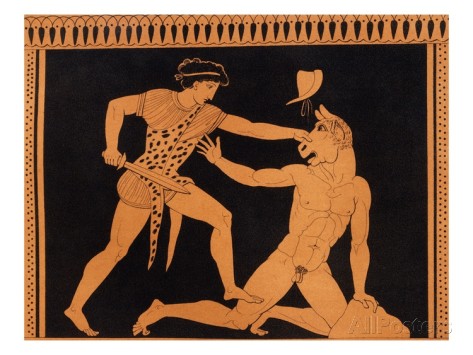
“The project will require Davis-Bacon wages if subsection D exhibit C lists the location of the Minotaur.  Contractors must defeat the Minotaur  in order to obtain wage rates for the City and State of the project…”

Often the sample contract will include subsection references as conditions of a requirement.  For example, if a Davis-Bacon wage scale is provided as a subsection reference – then the wages are required.  If the pay scale isn’t there the job doesn’t require them.  In some cases, the Architect will include a requirement to adhere to the Davis-Bacon wage scale for a specific county.  This means you must contact the appropriate offices and obtain the most current data.  Wherever possible, attempt to get the design team to verify the wage rates via Request For Information (RFI). There is a lot at stake if there’s an error in wage calculations.

Including this information with the plans and specifications reduces the chances of errors on subcontractor bids.  Check and double-check that ALL affected trades are listed.

Flight of the MeeBee Weebee

Minority Owned Business (MBE), and Women Owned Business (WBE) are MeeBee Weebee’s which is a catch-all term for businesses that have completed a certification process at the Federal, State, County, or City level.  Certain projects will define a percentage of the project value which must be awarded to firms that are certified as Small, Disadvantaged, Minority owned, Women owned, etc.   The intention is to “set aside” a certain amount of local work to help bootstrap firms get work they would otherwise struggle to compete.

Luck favors the prepared – make sure to investigate the local market.  Many projects with MBE/WBE requirements will also require Davis Bacon wages.  Small firms that routinely do these projects are often well-versed in Davis-Bacon wage requirements.  A well-developed subcontractor list should include information about certification status.  Wherever possible, attempt to obtain a copy of their certification for the file.  Digital copies are especially helpful when the file name is meaningful enough to enable a search.

Prepare for overflow

Preparation is critical for MBE/WBE bids.  Bid day requirements often include a list of selected subcontractors, their addresses, the contract values, their MBE/WBE status, % of total contract value, and certificate numbers.  On larger projects with diverse scope, this adds literally hundreds of data points to be filled out at high-speed just before the deadline.

Some clients will allow a preliminary list to be submitted with a more detailed packet to follow within a pre-set amount of time.  Be very careful to review what is required on bid-day as bids are frequently rejected for being incomplete, or out-of-order.

Building a good framework for the entire bid is crucial to making things fall into place.  All bids coming in should have “Davis-Bacon wages” listed as an inclusion for consideration.  All MBE/WBE’s should notate their certification boldly on their proposal to include any certification numbers.  Any requirement for incoming bids should be boldly noted on the original invitation to bid.

Keeping track

The estimate itself should include a MBE/WBE counter at the top of the estimate.  Locking the top rows allows this to be a “scoreboard” feature to allow the estimating team to know when the estimate has met the requirements.  Creating a check box next to the subcontractor name that signals the sheet to tally as a MBE/WBE simplifies the operations.  Be sure to test the estimate spreadsheet thoroughly.  The check box allows for on the fly “what if” tallies to determine which subcontractor to use.  Depending on the participation requirements and the project scope, the what-if scenario’s can present numerous potential configurations.

And now a word from our sponsors

Companies that are certified as MBE/WBE are not necessarily proven performers, nor are they an assured  low-risk prospect.

Davis Bacon and Meebeeweebees

Even if they are team players.


There are no guarantees that these firms can complete the project.    To the GC, the risk of hiring a MBE/WBE can be considerable.  The better informed before bid – day the better the decisions can be.  Certification processes can be very arduous – it is not uncommon for a qualified firm to be awaiting certification for long periods of time.  Estimators are well advised to be cautious about MBE/WBE firms – it’s better to spread the risk via several smaller contracts than to chance the job on a couple of unknowns.  Some firms specialize in projects with MBE/WBE requirements – some are very sophisticated and offer work on par with the market. Estimators should strive to develop relationships with these firms if they intend to compete in this market.

It’s not just the subs…

Thus far, these requirements have been about the subcontractors pricing which may have created the impression these programs are simply pass-though items that don’t cost anything.  Davis-Bacon wage’s must be proven via payroll for every person on the site.  Subcontractors will need to generate wage tracking data in compliance with the required forms.  Often outside agencies will conduct job site visits where agents will speak directly to tradesman inquiring about their pay.  Apprentice to Journeyman ratios are strictly enforced – as are over-time and holiday pay requirements.  Progress payments to the GC and/or the subcontractors are routinely withheld whenever discrepancies are found.

The additional work to track this data can be considerable – be sure to include adequate management and support staff wages in the General Conditions to cover it.  Larger jobs will require funds for printing, couriers, and storage of all the paperwork these projects require.

How to make it work for you

Davis Bacon and MBE/WBE requirements add cost to projects both directly and indirectly.  This creates a situation where low bid is no longer the sole deciding factor.  An organized estimator with a well-developed subcontractor roster can approach the bid with less fear that a competitor who threw their bid together will come in low by accident.  The more arduous the bid packet requirements the more likely the client will be to disqualify bidders who fail to comply.  Take this as an opportunity to generate a comprehensive and less harried bid.  Create a time-table that counts down to the deadline.  Assign an estimating team member to maintain the timeline.  Allow sufficient time to complete the bid packet in the timeline – then stop reviewing incoming bids according to that schedule.  Approach the bid with compliance being a higher priority than lowest price.

A well done estimate should present pricing with which to compare to subcontractor bids.  The earlier this is done, the sooner potential MBE/WBE contractors can be considered.  If these requirements can be met with a couple of highly qualified subcontractors, the estimators time can be freed up to scope high value subcontractor bids.

A bid-day estimating team needs a consistent methodology for scoping and entering scoped bids into the estimate.  Colored highlighters indicating MBE /WBE status are helpful to make quick sorting.  The follow-up required for full compliance can be extensive.  If the packet must contain copies of MBE/WBE certifications, assign a helper to follow-up on MBE/WBE bids to get them sent over.  Make sure the helper knows how to search the stored certificate database.  Instruct them to make a photocopy or scan of any new certificates that come in for the file.

Should you lose the bid, follow-up to determine which firms were selected for contract award.  Most public work that requires Davis Bacon, and MBE/WBE standards will provide some means for public review of the awarded contractors.  This feedback can be invaluable to find MBE/WBE subcontractors who aren’t “on your radar”.  Be advised that finding where this information is publicly available may require some discrete investigation.

The nuances and difficulties of preparing a bid with MBE/WBE and Davis Bacon wage requirements can be daunting.  Start with research to find out which subs are performing this work, and how much the work is going for.  These programs can dramatically affect the final price in areas where the Davis Bacon wages are substantially higher than market average.  Don’t be misled into thinking it’s a simple “wage offset”.  The accounting and clerical efforts necessary for these programs can consume a profound amount of resources.  Project managers with previous experience on public work can substantially reduce the risk.

With solid research, planning, preparation and execution, these projects can be profitable even in a competitive market.


For more articles like this click here

© Anton Takken 2014 all rights reserved

What’s the tax rate for my job? Why’s it so complicated?

I will do my best to explain some of the more basic elements of taxes as they pertain to construction projects.  I am not a Tax attorney, CPA, or MBA so please consider my work here to be a guideline and confer with qualified professionals whenever a specific problem arises.

State, County, and Cities collect sales taxes within their geographic boundaries according to legally defined guidelines.  Any commercial sale within those boundaries would be subject to the total of all applicable sales taxes – as seen on an ordinary sales receipt.

Use taxes

It didn’t take long for Cities to learn that if construction materials are purchased from out-of-town vendors, the City loses a significant revenue source.

What's the tax rate for my job? Why's it so complicated?

Many cities moved towards a “Use tax” system where the sales tax for all permanently installed materials is assessed at permitting.  The city then provides a tax certificate to the contractor which exempts the contractor (and their subcontractors) from paying the city tax wherever they actually buy their materials for this job.

From a practical standpoint, the city may elect to assess their sales tax based on 50% of the contract value of the job.  This is because it’s uncommon to get a material’s only total from every subcontractor making it very difficult to accurately calculate the actual material value. GC estimators should be very careful when creating their summary spreadsheet.  Use taxes will be calculated on project value commensurate with the material value.

Permits and bonds should be calculated AFTER the use taxes.  It would be well advised to consult with the permitting authorities as to what constitutes the “total project value”.  Permit fees are often priced by calculations on the total project value.  Be advised that every permitting agency relating to the project may have a unique take on this

Bonding fees

Bonds should be calculated last as they represent the total contract dollar value that the bonding agency will be responsible for.  Bonding fee is assessed on the total contract value – be very careful in calculating this as the math is not as simple as it seems. The bonding agent takes the final contract value against their rate. This means that their effective percentage is the sum of a geometric series where it converges .

So the accurate fee to four significant figures is actually

Bonding Fee = (Subtotal * %fee)/(1-%fee)

Add the bonding fee to the Subtotal for your final contract value otherwise the dollar amount of fee carried is less than you’ll be charged.  It’s worth mentioning that you’d need to carefully factor any overhead or profit on your bonding costs because they’re not carried anywhere else.  Most companies don’t apply markup to bonds but there’s no reason you can’t.

Tax license

Here lies a fairly big wrinkle.  Cities may not have a Tax License which allows them to collect their use taxes autonomously.  In such cases, the use taxes are collected by the State which later pays the City.  So at permit time – the GC is not required to pay the use taxes.

Adding another layer of complexity is the interplay of counties.  Counties are not licensed to collect their use taxes.  Most  but not all cities that are licensed to collect use taxes are also licensed to collect county use taxes.

So how do I know what to do?

State department of revenue offices generally publish a sales/use tax packet detailing the applicable rates and how the boundaries interact with their guidelines.  State taxes can include add-on percentages for special items like Bus/ transit systems, Stadiums, Museums, Housing Authorities,  Public safety improvements, the list can be extensive.

From an estimating standpoint the taxes will be either collected at the Permit stage, or they will be collected through individual sales in the supply chain.  The conscientious GC estimator publishes the subcontractor tax rate on their invitation to bid to ensure that Subcontractors carry the correct amount.  Be very cautious to get this right as bid-day tax corrections can consume a great deal of time.

Who does what?

Summarizing a bit, any taxes due at the permitting stage should be calculated in accordance with the collecting authority.  This is the GC estimator’s responsibility.  These taxes are paid in advance of material purchases so they must be excluded from subcontractor quotes.  The default condition should be to expect Subcontractors to carry any taxes that are not collected at the permitting stage.

Material suppliers that do not install anything may fall into a situation where they are not required to pay use taxes – the stipulations can be very complex.  Vendors who are well versed in the local tax law will often cite relevant tax code provisions if asked.  Trust but verify.

What's the tax rate for my job? Why's it so complicated?

Sure Bill knows his motor-driven bison well enough but his bookkeeping is awful.


What about tax exempt work?

It would be wonderful to report that all Government, Church, Charity, and Public School work is entirely tax-free.  Be very cautious in reviewing the specifications.  It’s possible for an entity to be exempt from State taxes without being exempt from City or County taxes.  Architects famously use legalese with so many switchbacks of logic it’s incredibly common for there to be RFI’s filed asking what they mean.  This is especially common in projects for Public Universities.  Get firm answers from the authorities that actually collect the taxes because they could be the agencies conducting audits on your firm later.

Scoping bids

Some GC’s are obsessive about tax rates.  Merely listing “taxes” in the inclusions is insufficient information for these firms.  They will doggedly require every bidder to list the precise percentage on every proposal.  Subcontractor’s with any experience in the market are aware that they must include their tax burden on their proposals.  Depending on the magnitude of the project they may default to a maximum percentage rather than the exact rate legally required.  Be very wary of subcontractor bids that exclude taxes entirely.  Unless they are labor only – such proposals should include a breakout of the material pricing for tax calculation purposes.  That of course assumes the project is not tax exempt.


For more articles like this click here

© Anton Takken 2014 all rights reserved


To fee or not to fee…

Fee or profit, is the amount you stand to gain for taking on the risk of the contracted value of the work.  Most contractors competitively bid using a percentage for fee.  In the cases of a negotiated agreement, the contractor may elect to bid a fixed fee for a set duration.  Any extension beyond that duration has a weekly rate.  This can alleviate client concerns regarding changes because the General Contractor has no monetary stake in change orders that won’t extend the job.

Profit is not optional for a business to succeed.  Winning an unprofitable job may well consume resources that prevent taking on a more profitable prospect.  This is called “opportunity cost” and it’s terrifically important to consider when a client is looking for  help on a low-budget project.  “Helping” that client costs much more than just the profit.

To fee or not to fee...

Experience shows these clients are more likely to require extra revisions, extensive pricing breakouts, and as a rule, they pay very slowly.  Charity organizations that must “pass the hat” in order to pay an invoice are great examples of this.

Unpopular can be profitable

As counter-intuitive as it may sound, very few people are analytical about what makes work profitable.  Often in construction, the focus is on the difficulty of a project.  As a result ground up or new construction project is viewed as more profitable than a remodel.  While it’s true that there is a greater degree of uncertainty in remodeling, it’s not the only factor to consider.  Basic rules of supply and demand play a role.  When there is more supply than demand, prices must fall.  More contractors pursuing ground ups leads to greater competition and lower profit margins.

Balancing act

From the earlier article on overhead we’ve shown that overhead is driven by project duration, pay delay, inflation, and office commitment to that job.  Put another way, if a job is too small the overhead costs are too high to make that firm competitive on those bids.  If the job is too large, the company risks all other contracted work becoming “non-profit” while they scramble to keep up.  Companies obsessed with landing the big job are especially vulnerable to biting off more than they can chew.

To fee or not to fee...

Efficiency of scale is how economists describe institutions that must reach a certain size in order to make their product marketable.  This is especially true of General Contracting.

Many entrepreneurs fail to recognize that contracting is about assuming risk.  An estimator’s job is to reduce risk.  The test of an estimators nerves is to balance the risk and the profit while keeping a keen eye on what the market will bear. Some estimators are very intolerant of risk to the detriment of their vocation.  It’s a fine line to be sure but every good estimator must reach a point where they are comfortable with uncertainty.

Most contracts require retainage which is  traditionally 10% of contract value held as surety until the job is done.  Most competitive markets keep profit percentages below 10%.  When the retainage is greater than the profit, the contractor must complete the job to cover bare costs which is why it’s done.   This relates to a surprising difference of opinion on what should and should not have the fee applied.  Simply stated, any direct project cost to include overhead should have the fee applied.  Permits and taxes are typically calculated on the sum-total  including overhead and profit.  Bonding agencies typically provide a formula for calculating their fees.  Be advised that they calculate their fees based on the sum total of everything included in your contract total.  Since bonding fees are job costs, you’ll need them included in that total.  Look for future posts with some excel formulas to help solve this problem.

Beware of moving parts that eat your profit

When bidding it’s very common to encounter requirements to provide allowances, alternates, and unit costs to the client.  This information can and likely will be used to influence owner decisions on anything from scope of work, to change order pricing.  In the case of publicly funded work, it’s very common for there to be several alternates which the decision makers use to maximize their allotted funding.  Speaking very generally, you should add overhead and profit to all additive alternates, and unit costs.  With deductive alternates you should keep the overhead and profit from the base bid.  The rationale for this is simple.  Deductive alternates typically don’t always affect the schedule duration. That means that your overhead costs aren’t likely to go down.

Since additive alternates can be viewed as a separate and smaller bid, it makes more sense to bid them accordingly. The overall project duration isn’t typically extended with additive alternates which means there’s greater workload on every scheduled day if they’re accepted.  Making every portion of work “pay its own way”, ensures that you won’t come up short.

Unit costs and allowances should be treated like cost accounts rather than jobs.  Keep in mind that you need to be OK with the client adding or subtracting using this price.  With an allowance, it’s important to know that the client will expect unused allowance money returned.  It is not uncommon for costly undefined items to be carried as an allowance.  Be aware that clients and design teams view allowances differently.  It’s embarrassing for an allowance to come up short once the design team weighs in.

To fee or not to fee...

Submitted without comment…


Alternates can drive permit costs as well

One commonly overlooked issue with alternates is how they influence the permit fees, taxes, and bonding rates.  In some cases it’s going to be negligible, in others it could be massive.  From the permit counter’s perspective the project costs whatever your contract’s written for.  They’re not concerned with how the client asked for the pricing.  Be advised that some cities conduct audits on contractors and any penalties they assess will come out of your profits.  Some cities have a policy to conduct an audit within six months of final inspection for every project they permit.

Alternates can define awards

Let’s suppose that a bid had five alternates.  When all the bids were read and tallied, your bid was low for all possible combinations but one which sadly, is the combination the client selected.  It’s terribly frustrating to be low on five out of six prices, and still lose the job!

Reading the tea leaves of bid results will be a future post but let’s take a moment on a few details about the last example.  If a competitor was higher than you were on the base bid and four out of the five alternates.  It stands to reason that there’s something significantly different with that last alternate.

Strategy may look like error to the opposition

Lots of estimators would assume there must have been a mistake. There may be another explanation.  If that bidder knew which alternates would be accepted, they could determine the overall profitability of the job and make the strategic move to bid that alternate “for free”.

Knowledge is power

It’s easy to get into the mindset that everything in an estimate must be about uniform and consistent accounting.  Remember that estimating get’s you the working knowledge to reduce risk, but bidding is about winning a job.  Many fastidious estimators lose bids because they don’t have a strategy to win.  It’s critical to get your head up to see the big picture.


For more articles like this click here

© Anton Takken 2014 all rights reserved