Tag Archives: GC

Controlling Risk

If estimating was simply calculating the price of things that work perfectly, we wouldn’t be estimating, we’d be cashiers. Since estimating involves calculating risk, it’s worth some investigation into what is involved. Risk is the uncertainty of a return and/or the potential for a financial loss. The construction estimator must understand that sometimes things go very wrong which can cost substantially more to fix than the job was originally worth. Taken to its fullest extreme, the sky’s the limit for liability.

Like absolutely everything in Estimating, we start by bounding the problem. Companies purchase insurance policies for a reason, there must be a means to backstop the risk of the worst case situation. This allows us to avoid factoring unlikely risks like acts of nature into everything we do. As a rough starting point, we need to consider how the project, or doing what’s necessary to build the project will present risks to people, property, or contractual agreements.

Contractual risks

Most estimators will hone in on contractual penalties like liquidated damages as their main risk. It’s understandable that an easy-to-read penalty would garner attention, but this ignores a very fundamental aspect of risk appraisal. If you can control or manage the contributing aspects of a risk condition, the resulting risk is reduced.

balance

Skeet diversified his portfolio with a “retirement vehicle”.

Taking liquidated damages as an example, the penalty for being late is less of a concern when the contract blocks the client, owners rep, and design team from impacting the production, or schedule. Some contracts require the bidders to submit their own Critical Path Method (CPM) schedule. This allows the General Contractor (GC) to define their duration, milestones, and completion dates. More control means less risk.

Screwing up is always going to hurt you

It’s worth mentioning that there are legal precedents which allow clients to pursue damages against a GC who’s late project delivery led to client losses. Contracts which include the phrase “Time is of the essence”, may not include stipulated liquidated damages however the client can recover damages against the GC for being late. Clients opening retail, resort, gambling, entertainment, retirement, etc, facilities can stand to lose incredible sums in lost revenue for every day they’re prevented from operating. Liquidated damages can actually be the least of your liability problems with high-revenue clients.

Diving deeper into contract law is beyond the scope of this article. I heartily encourage consultation with a contract administrator or attorney as needed. As estimators, we need to understand that penalties for failure aren’t the real drivers of risk. What drives the risk, is what drives the failure.

Flip the problem around. If absolutely everything goes perfectly on a construction project, you have a very simple trade of goods and services for payment. Contracts predominately exist to lay the groundwork for legal action for when things don’t go well.

Production + client delay = your risk

Contracts can, and often do, present conditions that work counter to the project’s success. These are the real drivers of risk. For example, a contract may stipulate the project deadline while also providing clauses whereby the client or their representative can stall production without corresponding schedule extension.

a-funny-looking-rooster-chicken

“We spent the last three weeks making changes, now we just don’t have time to give you a two-day extension”

Owners representatives are virtually never contractually at-risk for the outcome of their actions. Everything from submittal review delays to unanswered requests for information (RFI), can prevent the GC from getting their job done as valuable time passes. Contracts are generally written as though the plans and specifications, known as construction documents (CDs) are perfect. While there are certainly provisions for getting questions answered, and submitting change orders, the final arbiter deciding your fate is normally an unaccountable owner, or owners rep.

Good clients are lower risk but they are harder to find.

Project risk is certainly not strictly bound to the contract terms. Just as hiring good employees reduces the chances of problems, so too, does working for good clients with professional design teams. There are good and bad examples at every level of every market. Estimators must learn to size up their clients to get a sense of how things are likely to go. At present, Architects are often the “gatekeepers” of project opportunities for the GC. GCs looking for leads, should be careful to solicit the attention of Architects who attract good clients. The better the clients, the more discrete the opportunities tend to be.

Low barrier to entry work speaks as much of the client as the project. As Edmund Burke so artfully wrote: “Only fools rush in where angels fear to tread.” Better opportunities are out there, but you’ve got to do good work to see them.

Mitigation by bid scoping

GC’s mitigate risk by contracting out portions of the project scope to subcontractors (subs), and vendors. The subcontract provides a layer of risk-management in terms of stipulations, remedial actions, and so forth. By diversifying the risk among many subcontractors, the potential for a catastrophic problem is reduced. GC estimators spend a good amount of their time scoping subcontractor bids. Inclusions, exclusions, clarifications, and allowances frame the essence of what you’re getting for the proposed amount. GC estimators must be very careful when comparing subcontractor proposals because sub proposals are an integral part of how the subcontractor mitigates their risk on the project.

Specialty scope and the risk of the sub-tier sub

From the GC’s perspective, it might seem as though subs “miss” a lot of important scope, or that they’re lazy about including items that seem like they should be part of the deal. In practice, most subs are perfectly aware that the GC would prefer that they take on additional risk for work that’s not really their specialty. Inexplicably, GC’s will tolerate hiring upwards of half a dozen companies for the concrete work, but they have little to no patience for splitting scope in Mechanical, Electrical, or Plumbing (MEP) trades. If it’s pipe, it’s the plumbers job. If it’s wire, it’s the electrician. Perhaps it’s because concrete work is easier for GC’s to understand than the skilled trades.

Specialty vendors like Fire sprinkler, Photovoltaic (solar), Geothermal heating systems, and Fire Alarm are stand-alone companies that switch between subcontracting, and sub-tier subcontracting. Most subcontractors are ill-equipped to manage a sub-tier contract which adds to the subcontractors risk.
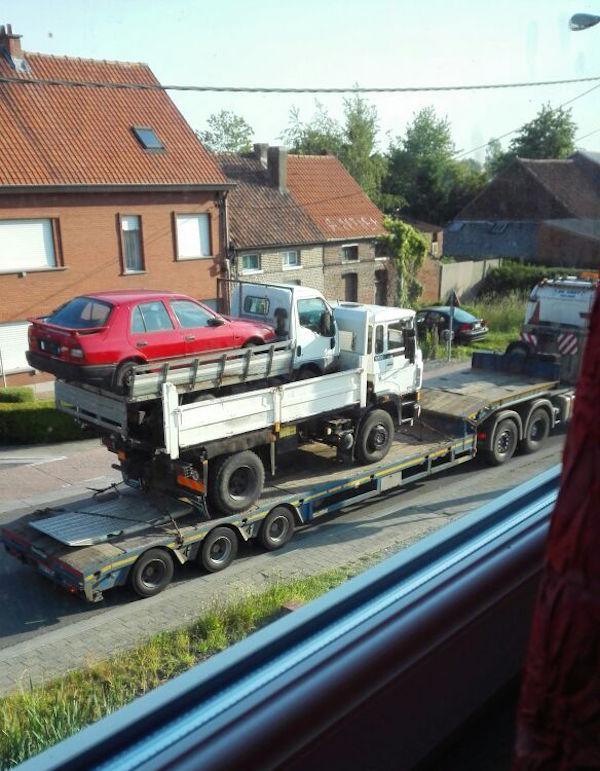
subtiersubtiersub

Artistic rendering of how the sub-tier-sub contract arrangement breaks down

GC’s pressing for these arrangements like the notion that they have only one contractor for “all the wire”. Lacking the willpower to learn about these “ghost trades” the GC’s are choosing convenience over control. Higher risk means higher prices, GC convenience adds up to squandered opportunities.

Risk in bidder spread

Bid scoping can portray risk in very stark terms. For example an estimator comparing three proposals obviously has a high, middle, and low bidder. It’s incredibly unlikely that the middle number will be perfectly between the high and the low. If the low bid is further away from the median amount, it’s an outlier. “Scary” low bids sometimes happen because people make mistakes.

Cost of replacement

The idea here is to quantify how much it would cost to hire a replacement if the low bidder fails. Be advised that once the project is under-way, the real cost to replace a subcontractor will always be more than the bid-day difference between bidders. Taking over the partially completed work of a competitor is a very different situation than the sub priced on bid-day. I should mention that there are plenty of legal recourse’s for subs who made a mistake on bid day. GC estimators must uphold their duty to investigate and correct bidder mistakes. Scary low bids should signal caution, that’s how a judge will see it in their courtroom. The risk in hiring a low bidder can be considered as the monetary difference between the outlier and the consensus median. I use the term “consensus median” to signify a price that would fall in the middle of the market-value proposals. Estimators should be careful about using the second low bidder as their consensus amount because it’s entirely possible that the low and second-low made the same mistake.

peers

Mark and Jay aren’t picky about what they bid so long as nobody else wants it.

The less the estimator knows about the subcontractors submitting proposals, the less faith they can reasonably have in small data-sets. Estimators who’ve bid highly sought-after projects may find themselves inundated with subcontractor proposals. The proposals will tend to stratify according to contractor ability and interest in the work.

The myth of sub coverage statistics

GCs are always looking for greater “sub coverage” because a bigger data-set implies greater certainty in their calculations. It’s certainly nice if you can get it, but unless you’re a market leading GC with an absolutely irresistible opportunity out to bid, the odds are good that won’t happen. Market leading subs are the only relevant contenders for the project. Without their bids, a GC won’t win the job. So GC’s need to have relationships with those market leaders before the bid. GC’s hounding anyone else for bids “just in case” they come in lower, are wasting the subs time.

It works the same in reverse for subs. The subs can’t reliably win profitable work without a market-leading GC, which makes market leaders lower risk. Lower risk means lower prices, higher hit rates, and better profitability for everyone.

GC’s who stockpile sub bids are wasting most of the subs time. They’re perfectly aware of this which is why these GC’s are among the least likely to provide bid results. Often these are the bid-mill estimators constantly calling an hour from their deadline with jobs that “nobody’s looking at”. This often means one of two things; they’re unacceptably risky for your competitors to work with, or they’re hoping your rushed bid includes a mistake that benefits them. It’s bad business either way.

scale

Ed has a feeling he might have under-bid the job.

Relative risk

We often think of a projects risk in isolation, rather than how the project affects our operation. Losing a critical bid can have dire consequences for a company. Deductive reasoning leads us to add up all the risks and consider the potential reward. Inductive reasoning works in the reverse. Starting with the understanding that we must win profitable work out of the available opportunities, we work within the boundaries of our current market to make the best decisions. It’s very easy to convince yourself that projects are too risky when you look at them in isolation.

Lots of companies become convinced that they’re good at building a specific type of project to the exclusion of everything else. I’ve encountered firms that were utterly convinced that they couldn’t build seemingly identical projects to their regular work, simply because the client was new to them.

As a company, the risk of losing an opportunity to capitalize on your expertise is substantial. Projects that are similar to past successes may indicate that your firms risk-mitigation is particularly effective for that kind of work. Your competitors may not have your expertise, which makes the opportunity less appealing to them. Market leadership is built on the ability to capitalize on opportunities that your competition cannot. You have to see them in order to hit them.

Perspective versus pessimism

Estimating is about controlling risk, not adding money for everything you’re afraid of. The more you know about what’s going on, the less you have to be afraid of. Estimators need to understand that pessimism is a poor proxy for knowledge. There are times you’ll know that a job is a time-bomb of risk. Constant pessimism devalues your council to ownership. There are lots of angry estimators forced into bidding bad work simply because their boss tunes out their complaints. The only thing worse than losing a good job is winning a bad one. In my experience, it takes a considerable effort to lose the truly awful jobs because wise bidders steer clear. Sometimes the only way to lose, is to decline to bid.

hyena

“We thank you for the opportunity…but we’re not currently bidding work in the carrion market.”

Timing

Sometimes the most significant risk in a project is how winning it would affect your ability to succeed in everything else you’ve got going on. Tight labor markets can limit growth which in turn limits the amount of work a company can take on before they can’t meet their obligations to perform. Seasonal rushes can quickly overtake the available resources leading to higher prices. Estimators preparing bids for work that will take place during seasonal rushes must consider how this opportunity compares against the most profitable work of the year.   Careless estimators can find they’re suddenly on a hot streak winning bids during slow seasons, only to discover their summer is booked solid with low-profit work.

There’s risk in losing opportunities

Estimates are not free, so estimators must consider the risk of investing their time and energy into losing clients. Subcontractor may encounter GC’s with high bid volumes and low hit rates. I refer to these firms as bid mills since they grind out bids as quickly as they can. Sadly, short-changing the estimate leads to lots of mistakes. When they’re lucky, the mistakes lead to a lost bid, when they’re not, they land a profitless job. As a sub, your irresponsible GC’s problem eventually becomes your problem.
priorities change

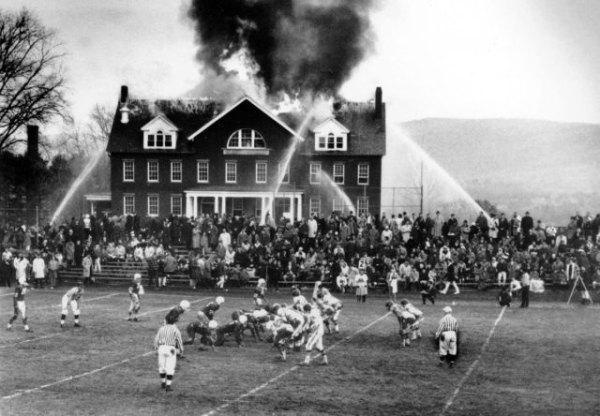
Bid mills compete in the warm glow of their accomplishments.

The very best protection against losses is to avoid doing business with irresponsible firms. The time spent on the lost bids could have gone to better opportunities with other clients. The rare and profitless win, consumes company resources to eke out a minimal loss on the project. Those resources were pulled from profitable employment with responsible clients.

The real risk of working with bid-mills is tremendous. Some subs could improve every aspect of their operation by firing bad clients. It’s often difficult for them to see it because they only see themselves occasionally winning bids. Gamblers go broke thinking along the same lines.

Safely getting from existing to proposed

Construction documents generally depict the existing and proposed conditions without going into much detail on how the construction is done. Architects typically rely on the build team to determine the means and methods necessary to realize their design.

On jobs with limited applicable scope, Architects may elect not to hire an expensive engineering consultant. The assumption is that a “little” engineering problem is an acceptable risk for the build team to assume. For example, adding a new piece of roof top HVAC equipment to an existing structure. Without engineering approval beforehand, any resultant failure will be the build-teams responsibility.

Civil projects can present environmental challenges that are safety concerns. Retaining walls are used to hold back soil that would otherwise slump, slide, or erode. Different soil types require “cut-backs” which relate the soils stability to how steeply it can be piled. Sandy soils are prone to cave-in so excavations must have gently sloped edges for worker safety while the walls are constructed. Restricted sites may not allow sufficient room for safe excavations. Ground-water, flash-flooding, and seismic activity can all generate additional safety hazards for workers. These are not simple problems with easy answers.

Projects dealing with compromised or hazardous structures are especially given to unique engineering challenges. These projects demand an engineered plan for every step to completion. Hazardous materials require a site evaluation, testing, and remediation plan built around worker and environmental safety. Estimators are often presented with a false choice; help the client to save money or take chances on safety. There is no choice, build safely or don’t build at all. Playing dumb, or passing the buck on safety issues won’t protect you when bad things happen. Local traditions and “school of hard-knocks” graduates often underestimate the magnitude of what is at stake because they don’t know the margins of error in what they’ve done. A lifetime of narrowly averting disaster does not, an expert make.

Nuclear option

Estimators can contact engineering firms and request a proposal to solve the problem. Often engineers will provide a roughed-out plan of action along with their fees to develop the design, do the calculations, and so forth. Often we get so hung up on the idea that half-baked design is an unavoidable vocational hazard, that we forget that our business is in contracting labor. Estimators work by controlling risk through whatever channels we can. It bears mentioning that estimators should list out the cost of this safety engineering as a breakout cost. Communicating the real cost of safe work may spur an honest client to get their design team on track. Once it’s made so clear, it’s difficult for clients and design teams to pretend they didn’t know it was an issue. Moreover, it gives the client a sense of your commitment to safely delivering their project.

Summing up

Estimating is about controlling risk, rather than simply summing it up. The savvy estimator is looking for ways to mitigate all of the risks mentioned above. Risk is most effectively mitigated by building an operation around successfully controlling problems common to the work you’re pursuing.

Some really excellent clients have horribly one-sided contracts. Until market forces cause them to reconsider their terms, these clients are a bountiful opportunity to the companies who have “seen past the contract” to know what they’re really like. Honest, cooperative, and communicative clients can mitigate the risk of an ugly contract.

Competitive bidding calls for perspective and judgment. Losing a bid isn’t the end of the world, but don’t kid yourself; there are consequences to losing. Time spent on the losing bid wasn’t invested in other pursuits (opportunity cost). Wasting your subs, or vendors time with fruitless bidding costs political capital by lowering your status as a market leader. Failing to justify your place on the client’s select bidders list may get you cut from future invitations.

Taken in whole, the impact of losing a bid carries its own, very substantial risk. “Throwing a number” at work you don’t want is almost always worse than declining to bid. Some GC’s may be concerned about “appearing weak” for backing out of a bid they’ve invited subs to bid on. Estimators understand that there are opportunities that pose much greater risk than they’re worth. Showing good judgment is far superior to a bluff. Showing respect for the sub‘s time is much appreciated. Often it takes a bit of time after the RFP to get a sense of the client and their design team. No amount of perfect bidding will protect against an unethical client. Starving bad clients of bids is one of the best ways to lower the market risk.
example


For more articles like this click here

© Anton Takken 2015 all rights reserved



Proposals – How to make yours a winner

There are many schools of thought when it comes to proposals. Some estimators feels that a long document with extensive terms and conditions will insulate the firm from litigation. Other estimators prefer a more simplified proposal. The extremes range from an emailed dollar amount to a multi-page proposal. Good proposals strike a balance between brevity and controlling risk. This article will focus primarily on proposals for projects that don’t require specific bid forms.

Getting started with the ITB

Start with the objective of a proposal. The proposal is a contractual instrument submitted in response to an Invitation To Bid (ITB). Therefore much of what must be in the proposal will be addressed in the ITB. An estimator working for a General Contractor (GC) receives the ITB from the client or their design team. An estimator working for a Subcontractor (Sub) receives their ITB from the GC’s bidding the job. Something many GC estimators should consider is that they can include the clients ITB with the plans and specifications they distribute to the subs. There are a few concerns to be aware of. If the GC’s are trying to solicit early bids, the ITB will reveal the real deadline. Subs that are concerned about bid shopping will release their proposals just before the deadline to prevent the GC’s from having time to share their bid with competitors. Giving them the GC’s real deadline all but ensures that there will be no time to review their proposals before the deadline.

just right

Mort will look you right in the eye as he’s doing it,  he just doesn’t care.

Another potential concern is that some ITB’s list the pre-qualified GC bidders. Subs may send proposals to competing GC’s if this information is shared. Savvy GC estimators will include the pertinent information from the client’s ITB onto their own subcontractor ITB form.

The high points

Every proposal should be done on company letterhead with the company’s name, address, and phone number prominently displayed. The client, project, and project address should also be included. On small and simple projects, it may be reasonable to list important exclusions and exclusions along with the bid amount. More complex projects benefit from a scope narrative which helps to define how the project will take place. Often clients will request a schematic schedule or an anticipated duration on the ITB. Be careful about the differences between working days, business days, and calendar days.

Important factors

When your client receives your proposal, they are primarily looking for the cost. Public bid openings will generally read the bidder’s total along with a cursory check that the bidder has included all relevant construction documents before announcing “apparent low”. Some bidders place the final total at the back of the proposal in an effort to lead the client through their presentation of the project scope. Other bidders place the total in a summary/cover page with their narrative, schedule, etc. to follow. There are successful bidders using both methods however there are a few things to keep in mind.

Make it easier to use

Templates should be developed to ensure consistency, quality, and speed. Many companies fail to consider how difficult it can be to edit a multi-page proposal. Subtle items like monetary notation can encourage errors. For example, let’s say the proposal reads “We are pleased to present pricing for the Rutherford project. Our base bid proposal is Five Hundred Fifty Three Thousand, Two hundred and Two dollars ($553,202.00).” Spelling out the monetary amount involves typing ten words against typing eight numbers. Last minute changes may affect your base bid amount. A template that uses spelled out monetary figures and numeric figures greatly increases the odds of a typo.

Beyond typo’s, many word processor programs are plagued with formatting issues where page breaks are awkward or inappropriate. Considerable time get’s spent trying to move things around so the printed documents are properly formatted. Standardized templates built for quick data insertion are a godsend. Entering “$XXX,XXX.XX” as a place holder for a monetary amount allows the template to be formatted before the bid. Highlighting any placeholder text speeds the estimator through the template, adding last-minute information as needed.

Separate the dynamic from the static.

In some cases, it behooves the company to develop separate files for the summary, narrative, inclusions, exclusions, schedule, etc. Having all the sections within a single file document means the estimator will need to flip through many pages to make changes. Items like the narrative and the schedule are unlikely to change on bid day, however the summary and exclusion pages will almost certainly be modified several times. At a minimum, group the sections according to how likely it is you’ll need to modify them.

Put it all together

Regardless of how many files, programs, or pages you end up with, it’s good practice to consolidate the proposal into a single file that’s small enough to email. Whenever transmitting files, it’s good practice to use locked files visible through a free “reader” version of popular software. Many free programs exist which allow a program “printer” to be installed which allows the user to “print to the file format”. Scanners are another option provided they output to the desired file format. Image file formats native to one operating system should be avoided because they are cumbersome and can create formatting issues when printed on the client’s computers.

A proposal is not a contract

Consider how the proposal feels to the client. What does twenty pages of “boilerplate” communicate to the client? If the client provides a sample contract in the specifications, your firm’s boilerplate may have absolutely no bearing on the final contract terms. Some clients choose to sign a proposal and forgo a contract. In those cases, it could make sense to have a proposal that adequately covers contractual obligations, remedies, and so forth. Small projects for informal clients are more likely to go this route. Generally speaking it’s a better course of action to use a proper contract form, than to rely upon a proposal or a handshake.

A proposal and a contract are separate instruments. Combining the two is false economy. Contracts may be subject to negotiation after the notice of award, or notice of intent but there’s no guarantee. If the contract terms are unreasonable you must ask questions about them BEFORE THE BID. If the terms are still unreasonable, don’t bid the job. Tacking on your firms terms and conditions to the proposal is not likely to change anything when the contract is part of the construction documents.

Contingency

Local tradition and corporate culture often define how and when a contingency may be applied to a proposal . Those in favor of contingencies point to the relative ease in which initial changes are addressed to get the project off and rolling. Those opposed look at a contingency as the dollar value of the firms inability to build to the plans. The fact remains that very few jobs are built without change orders. Whether the local tradition is for the contractor or the client to carry the contingency is irrelevant, it’s good practice to admit that construction projects have risk to be accounted for. Be advised that contingency is an easy target for client frustration. When comparing two similar proposals, the bid with lower contingency may appear to be more confident or competent.

Velociraptor pony

Now that’s a a guy who get’s things done!

Convey confidence

Does the proposal read well? Clients may not share your passion for how things come together. Long and pedantic narratives with trade-specific jargon aren’t likely to speak to your client. Ask yourself what the client is looking for. The client is excited about their project. They want to know that challenges are well met and that the build team is imminently capable. Weasel wording, artful dodging, and avoiding accountability will immediately raise alarms with experienced clients. Honesty builds trust, trust supports confidence. Many clients get their very first impression of your firm by reading your proposal, don’t try to sound like a lawyer, an auctioneer, or an encyclopedia.

Times where less is more

Laundry lists of inclusions are easy to generate for an estimator however they may create the impression that anything not explicitly listed is omitted. More general and sweeping inclusions can create a sense of competency and completeness to the proposal. Inclusions should attempt to bring particular focus to easily missed items or to costly items that are driving your price. Many clients compare competing proposals, so write inclusions with the intention of exposing items your competitor may have omitted.

Conversely, if you’ve found a good idea that saves money on the project without affecting the scope or quality of the work, it may be wise to keep mum about it. Unscrupulous clients may share your good idea with a competitor.

Inexperienced clients may prefer long proposals to better assuage their anxieties. A proposal is a sales tool, so it’s smart to tailor it to the client’s needs. Be cautious about generating questions or presenting extensive options with an inexperienced client. Many estimators treat an inexperienced client as though it’s perfectly normal to have a myriad of options available to every possible concern. This overwhelms the client with immaterial decisions that serve to delay contract award. Some issues are significant and must be addressed, others are flights of fancy. Keep the client on track by staying on topic. If the client wants to change direction, they should consult their design team who’s not as bashful about charging them for changing their mind.

Everything in business is about time and money so every price quoted needs an expiration date. Be sure to specify when your quote expires because you may need to revisit your pricing if the award is delayed.

Times where more is more

Not every set of construction documents will be a pleasure to work with. Incomplete, conceptual, or incorrect construction documents generate considerable risk to the bidders. Every effort should be made during the bid to secure answers to significant questions about the scope of work. Nevertheless there will be times that the estimator must protect their firm against a risky job. Simply excluding some scope of work on the grounds that it wasn’t well-defined is common practice. Depending on the project and the issue, an exclusion may get your bid disqualified.

For example, let’s say a project bid to remodel an existing office building. The plans include key notes calling for demolition of existing however no demolition plan or narrative was provided and there was no job walk opportunity. RFI’s seeking photographs, narratives, or job walks to verify existing conditions went unanswered. What do you do? Excluding demolition is likely to get you disqualified since it’s obvious that it will be necessary to do the job. Adding money to your proposal to pay for demolition may make you uncompetitive. In this case it’s wise to consider what you know. If the office building is occupied, then figure on a complete demolition of a typical office space. Items like hazardous waste, or salvageable materials need not be considered because “worst or best case” scenario’s are not “typical”. You could define the issue in your inclusions, along with a budgeted amount to pay for it. Depending on the situation it may be appropriate to note the RFI that went unanswered to prove your diligence.

Be wary of presenting too many solutions to design problems. Every price you provide may be used against you when unknown details are later revealed. Remember that the design team is paid to solve design problems and diplomacy is important to protect your interests. If you provide an allowance, expect to provide accounting for its dispensation and remuneration to the client for any unused portion. Many clients feel any profit on an allowance is unfair so bid accordingly.

Advice to subcontractors ; make it easy on the estimator

GC’s are reading subcontractor bids at 90 miles per hour. The estimator needs to have a solid subcontractor proposal for every scope of work. Once they have the entire project accounted for, they will pursue potentially cheaper subcontractor proposals. Time is of the essence for the GC, they may not have time to review every proposal coming through the door. Only those that seem lower than their apparent low proposals will get priority. It can be a big advantage to be the first apparent low since there may not be time for the estimator to review competing bids.   Easy to read and understand proposals are more likely to be scoped. Anything that smacks of a “gotcha” issue may send your proposal to the bid room floor. Put THE ESTIMATORS name and direct phone number in a prominent location. If the GC need to call with a question, they’ll absolutely hate losing time to a receptionist or dial by name directory.

dogerator

“Please put your estimator on the line….bad dog!…Bad dog!”

Given the choice, the GC estimator will avoid calling time-wasting companies. More than once I have had only enough time to make one call before the deadline. It’s a simple thing that lots of companies do wrong.

Speed reading vs. the checklist.

Long, drawn out proposals are slow to read and inevitably hide important information in blocks of unnecessary text. The only thing worse than a proposal with chapters is a checklist. Some subcontractors use a checklist/matrix where they list out standard inclusions and exclusions by row. Columns carry an icon to designate if it’s included, excluded, not applicable, or whatever. These are immensely irritating to read and interpret. It’s possible the idea is to speed up bidding by having a template that’s quick to fill out. Whatever time it saves the bidder, it costs twofold for the GC. Trying to read through thirty odd items that aren’t applicable looking for something important is very frustrating. It’s a bad practice that needs to end. For every “gotcha” victory claimed for the checklist, there’s an estimator quietly removing a bidder from the invite list.

Understand the default conditions

If your proposal isn’t furnishing and installing some scope of work, it should boldly declare “Material only”, or “Install only”. The default understanding is that a subcontractor proposal is to furnish and install everything for that scope of work.  Fire alarm subcontractors often exclude conduit, back boxes, and pull strings even when they claim “turnkey” on their proposals. Often the bidders perspective is that “it’s always done this way” so they believe it’s their clients responsibility to address their shortcomings. This prima donna behavior is common among semi-autonomous trade retailers like Fire Alarm, Elevators, Kitchen Equipment, Pre-engineered building manufacturers, and office furnishings. These proposals generate additional risk with their confusing and duplicitous presentation. In some cases the shoddy proposal’s risk is high enough to merit hiring the second low bidder.

Some subcontractors refuse to include taxes on their proposals “to simplify” matters for themselves. Taxes may be complicated, but they are certainly not optional. Professionals should understand that whatever is required to actually do the job should also be included in their proposals. This potentially includes taxes, permitting, insurance, bonding, licensing, cranes, freight, and so forth.

airlift dino

Material handling, rooftop delivery… you know, standard stuff.

GC’s are understandably frustrated by subcontractors submitting bids missing obviously necessary items. Laying such a trap may backfire on you. If you don’t bid to the default conditions, the default decision may be to scuttle your proposal. Some GC’s will write contracts in full reversal of proposal exclusions like taxes that they view as entrapment. Attempts to “red-line” their contract or add to the bid-day amount typically end with a simple choice; do the job by their contract or be excluded from all future work.

Unit price your way out of a job

Some subcontractors submit proposals with unit pricing that goes on for pages. Concrete work is particularly given to complex contracts because companies often specialize in only site concrete, flat work, foundations, and/or rebar without consistently providing the materials. It may require the GC to write a half-dozen or more contracts pertaining to concrete alone. Long and detailed unit pricing forces the estimator to do dozens of calculations to answer basic questions. Many of these bidders feel that sharing every detail of how they arrive at their proposal will obligate the GC to accept any errors or omissions they failed to correct.  This is trying to avoid accountability for their takeoffs which is unprofessional and indicative of a high risk proposal. Many times a professional bid would arrive with a single price to furnish everything necessary for all the concrete on a project. Often, after hours of calculations involving lots of bidders, the net difference between that professional’s amount and the cobbled blend of partial-proposals was very slight. That meant that even if the professional was more expensive, they were less risk and therefore better value. Partial scope bids communicate that the bidder has focused on exercising their limitations instead of their abilities.

Unit pricing everything enables the estimator to take incomplete competitor bids and accurately plug the gaps. This may leave the unit pricing subcontractor with only small, and unprofitable portions of a larger project.   Any unit price you provide has the potential to be used against you not only for contracting, but for change orders as well. It’s less risk to use a unit price bid for smaller scope of work.

Good proposals lead to easy contracts

Subcontractors must understand that a proposal is a promise to tender goods and services for the project in exchange for a stipulated sum.  The scope of work needs to be done per the construction documents, period. GC’s write contracts in broad encompassing terms like “all flatwork” , as opposed to listing the square footages of all flatwork on the project for that reason.

The estimator wants to know you’ve got everything and they want to know if it’s install only, furnish and install, or material only. If you’re providing those options, simplify to sitework, flatwork, and foundations.

Don’t hide exclusions

Every bid is based on its exclusions. Bids that are “shy” about presenting the exclusions take longer to scope. Long subcontractor proposals are especially prone to concealing exclusions. The estimator may be in a terrific rush to scope bids. As the deadline approaches, the amount of time they can spend reviewing a bid that’s not apparent low diminishes. It’s possible that your list of inclusions and exclusions will cause the estimator to revise their apparent low. Making your bid easy to read and understand is pivotal towards snagging such a success. GC estimators are often very thankful for your professionalism which builds trust. That trust may bring new opportunities.

One page

Opinions differ however the vast majority of subcontractor proposals are a single page. A well written proposal does not improve with higher page counts.   Some companies require a hard copy of every proposal in the bid book. A one page proposal with four pages of boilerplate means more time at the printer and less time deciding if they’ll hire you. Estimators get plenty tired of reloading the printer. Do them a favor and stick to one page proposals. Some bidders will email two files, a one page proposal and a standard terms and conditions packet. This is one way to meet corporate requirements for boilerplate without irritating your client. Be sure to put the estimators name and phone number on every page. Wherever possible put the bidders direct phone number to avoid making clients call the main number and get transferred.

Final Thoughts

The proposal should be attractive, professional, easy to read, and informative. Photo’s and images on the proposal may not print or photocopy well. Digital watermarks may appear nicely on bonded stock but obscure the writing on cheap copier paper. Formatting needs to be based around standard 8.5″ x 11″ paper because not everyone will have legal paper stock in their printers. Provide enough open space on your proposal to make the writing easy to read. Landscape printing is not appropriate for text portions of proposals but has applications for schedules. It can be difficult to read a landscape printed page that’s stapled to a portrait printed packet. Every page should have your firm’s name, the project name, the page number and your phone number on it. It’s easy to miss a printed sheet in a busy office. Lots of packets get dropped before they’re stapled. Make it easy to assemble, collate, and verify that they’ve got the entire thing.

It should be obvious but run a spell check and have a colleague check your grammar. This is not the time to appear unprofessional. Clients may share your proposal with their colleagues, design professionals, even your competitors. Make sure that your proposal reflects well on you and your firm.


For more articles like this click here

© Anton Takken 2015 all rights reserved


Adults in the room

I recently heard a comedy bit by Whoopi Goldberg where she was talking about her childhood. When she was a child she asked her mom if she would be killed in a plane crash. Her mom spoke unequivocally; “no darling, you’ll be just fine”. This lead me to think of how we as adults seek to provide stability, security, and reassurance to children. We are willing to promise things we can’t control because we place greater importance on our duty to the child’s emotional well-being than our fears of being wrong.

Adults in the room

Estimating is about controlling risk. Sometimes risk is controlled by making someone else responsible for the worst that could happen. Everything from insurance policies to subcontracts amounts to an exchange of risk for profit. Far from the absolute assurances of a parent to a child, trading risk for profit involves a lot of limitations on what’s really at stake. In the most extreme cases, it’s hard to see where they’re accepting responsibility for anything at all. The accountability dodging is so intense these firms are failing at their purpose, which is to relieve their client of risk.

Winning a bid that leads to contract, essentially transfers project risk from the client to the General Contractor (GC). Read enough Prime Contracts and it will be evident that the intention is to lay all risk on the GC. Typical contracts provide options for the client to withhold payment, levy fines, or even replace the GC on their project. The contract is written to protect the client from as much risk as possible.

In contrast, the GC has little to no latitude to demand proof of funding or timely design revisions in the case of missing information. Both of these issues have profound implications on the project’s odds of being successful. In some cases, contractors will request proof of funding before signing the contract. Tragically this is too late to help the estimator. A contractual stipulation that proscribed the maximum response time from the design team could potentially discount the projects risk

Adults in the room

Hard lines and fuzzy details aren’t for everyone…

Estimators might get five to ten working days with a set of plans before their firm is expected to accept millions of dollars in risk. It’s terrifically common for all Requests For Information (RFI’s) to be answered via a single addendum issued a day or two before the deadline.

It’s impolitic to say it, but this practice means that the real risk of the job isn’t evident until the last day or two. The unstated assumption of the Client and Architect is that the bidders somehow know the unknowable. Estimators are expected to be the adults in the room by providing stability, security, and reassurance to the client. A careful reading of most Request for Proposals (RFP) communicates the client’s desire to shift all risk onto the GC whose proposal is the most complete, and least expensive.

It’s interesting to note how there are some missing elements in the client’s priorities. Consider how difficult it is to draw a perfect set of plans. This task becomes nearly impossible when unexpected conditions are revealed during construction. Even “clean” ground-up projects can encounter something unexpected like an archeological find. No matter what the driving issue, the GC must be able to communicate, negotiate, and maintain production with the design team. Client RFP’s never address these issues beyond occasionally stipulating the change order process in their specifications.

You might ask how a client could evaluate GC’s communication, negotiation and management skills during the bid stage. Truthfully, it’s difficult because there’s no uniform standards for these skills. The closest most clients get is to conduct interviews with the low bidders prior to making a final decision.

Adults in the room

It’s the combination of peril and opportunity that can have you wishing you’d stayed at the office…

I propose a different approach. Fair bids are accomplished by uniformly shared information, and uniformly upheld expectations. If clients want better communication, negotiation, and management on their projects, they need to define and uphold these standards for everyone, including their representatives.

RFP’s could include clarifications that the design team has X number of hours to respond to RFI’s, and that RFI’s are only counted as answered when the GC agrees they’re answered. This prevents RFI’s from being answered: wait for reply. I’m sorry to say, that I’ve encountered that game several times in my career!

Further, changes to the project could follow a proscribed resolution scheme which escalates the issue in proportion to its impact on the job. Reducing the time spent dithering, haggling, and arguing over blame reduces the project risk, which reduces the cost.

Adults in the room

After further investigation, it was revealed that Scot just liked to argue.

The reason the “blame game” is played is because mistakes cost money. At a bare minimum, it’s time for contracts to admit that design errors and omissions exist. In some markets there is a tradition of carrying a contingency fund to pay for these issues, in others, the client is expected to hold their own fund. The problem is that nearly all risk is transferred to the GC at contract. Holding the GC accountable for design shortcomings carries a fundamental dishonesty into the project. If the GC has no authority to direct design resolution, they are caught in a situation where they pay for the mistake and they have limited ability to make it less expensive to the client. Design teams who must pay for their own shortcomings are much more inclined to seek timely and cost-effective solutions. Further, the practice would cause many design teams to reconsider putting incomplete plan sets out to bid. Experience has taught me that hard bidding on incomplete plans leads to delays, change orders, budget over-runs, and client dissatisfaction. Sadly, in most cases the client blames the GC because contractually everything is the GC’s responsibility.

Absolutely everything pertaining to decision-making needs three things attached to it. First is a timer to illustrate how long it’s been an issue. Second is an estimate of its schedule impact on the project. Third is an estimate of its budgetary impact on the project. Issues must be prioritized according to their net impact on the project. Issues are only counted as resolved when the problem, solution, schedule, and cost is fully (and contractually) settled. Signed change orders should never be optional. If the work changed, so did the schedule. Even “free” changes should be recorded for future reference. Change order pricing needs an expiration date because the window of opportunity is always limited. Expired change orders are recorded as “declined”. All of the worst jobs I’ve ever done had a long list of outstanding, unresolved, and unpaid change orders because the client was given carte blanche to disregard the process. Time spent doing extra work drove delays on contract work, and the client felt no compunction in citing delays as their reason to decline payment for change orders.

 Adults in the room

Skip a step and problems might fall on you.

Clarifying this process and the expectations of all concerned unifies the standards under which the project will be conducted. Contracts contain innumerable words defining how under-performance intersects with litigation. It’s well past time to define how projects should be successfully run. Every GC advertises their unique brand of “Building relationships”, however the real mark of success is how well they manage to safely, ethically, and profitably get things done regardless of client or design team cooperation.

Another means by which a GC can control risk is to better define what they’re really bidding. Clarifications and exclusions are the simple explanation or listing of what you are and aren’t accepting responsibility for. However the project you are bidding exists between the clarification (inclusion) and the exclusion. Make sure of everything that falls into the gap between them, because the client expects you’ve got it in your bid.

For the really risky jobs, it’s time for a narrative approach. You’re seeking to illustrate the entire arc of your concerns; unknown existing site conditions, a demanding schedule, a weak design team, a limited client budget, etc. What you’re proposing is a solution and it’s price. The solution is driven by your ideas and your team. Subcontractors might shy away from the job as drawn, but a GC with a solid plan and a willingness to “go to bat” for their solution reduces their risk tremendously. Basic assumptions about the limitations of what you’re doing need to be communicated explicitly and clearly in terms the client will understand. If there’s a chance your assumptions are wrong, you must be honest about the risk that presents to your client.

Be advised that an unethical client might take a perfectly spelled out, low-risk solution to your competition. If this is a concern, I strongly encourage you to reconsider bidding to such a client. Until and unless professionals shun bad clients, our industry will continue to suffer.

Adults in the room

Dishonest business:  One guy eats it, hoping the other guy chokes.

Life isn’t fair, and we’re often expected to handle things we can’t know about beforehand. Being the adult in the room is about more than promising things you can’t control. It’s about understanding that plain speaking and honest dealing are the only real tools we have to control risk. As professionals taking on the incredible risk of these projects, it’s our duty to be responsible and to lead by example.


For more articles like this click here

© Anton Takken 2015 all rights reserved


Why is everything a secret?

“Discretion is the better part of valor” : Shakespeare.

The life of an estimator involves a great deal of discretion for some very good reasons. For example, subcontractor (sub) bid amounts are kept confidential to maintain an ethical bid. Sharing subcontractor bid amounts with their competitors to achieve advantageous pricing is bid-shopping which is unethical.

evil

Bid shopping: Not a good look

Beyond the mechanics of maintaining a fair bid for the subs, an estimator must be aware that their competitors are watching. Revealing how you’re winning bids can be a costly misstep. Developing leads can be a very expensive proposition, so it behooves the savvy estimator to be discrete. The same goes for a subcontractor distribution/invitation lists. These are the “nuts and bolts” of an estimators operation and should be considered confidential.

Design professionals face an incredible challenge to generate a perfect set of drawings. GCs should show deference and discretion when they find mistakes in the plans because strong working relationships are built on respect. Embarrass an Architect at your peril!

Code of silence

Many estimators are tight-lipped about everything. This code of silence begins to work against them in quiet ways.   It should be obvious by now that communication is a vital aspect of successful business. Feedback is the first victim to overriding caution. Most General Contractor (GC) estimators have a bid results policy of “given when asked” which means the subs must hound the GC for bid results. Often the answer is a terse and nearly meaningless reply such as “we lost“, “you were third“, and the perennial favorite: “your number was competitive“.

filed

“I’d like to give you better answers but getting to those files is tricky…”

Forcing subs to bid blindly means they’ll spend more time missing than hitting. GC estimators who won’t share timely and meaningful results leave little incentive for subs to continue trying. GCs who expect bids anyway are communicating a lack of concern for wasting the subs time.

It bears mentioning that its standard practice for estimators to withhold bid results on projects they’ve won in order to allow the project manager (PM) time to review the bid for errors, omissions, and inconsistencies. Obliging the PM to contracting with a sub who was not actually the legitimate winning bidder is a serious problem . As a result, many firms have a policy against providing bid results before contracts are settled.

GC estimators should nonetheless provide bid results whenever they lose, and they should actively circle back after contracts are settled to provide feedback on wins as well. Proving that you’ve nothing to hide is an excellent way to build subcontractor loyalty. It’s seldom mentioned but the typical exchange between GCs and subs is like this: GC invites the sub to bid, the sub bids the job. The next reciprocal, logical, and ethical step is for the GC to provide bid results to the sub voluntarily. It’s a huge waste of everyone’s time making the subs nag for bid results that could easily be emailed the moment you know you lost the job.

Honest dealing is the hallmark of a professional which attracts market-leading bidders. It may seem counter-intuitive, but sharing how you lost directly leads to winning more often. Rapid bid results and high hit rates are constant companions in the hard-bid world.

Avoiding responsibility

The pre-bid stage of a project can be a very fluid process involving changes to the plans, scope, and budget. Often there can be substantial contradictions in the Construction Documents (CDs) that need clarification. Some estimators don’t bother to do Quantity Take Offs (QTOs) of subcontractor scope. This invariably means they aren’t pursuing Requests For Information (RFIs) like they should. Worse still, some GC estimators are afraid to “appear stupid” for asking a question that may be answered in the plans. The subcontractors questions go unanswered by the GC, whose “strategy” is to simply demand all subs bid per the plans and specs.

secret

“Pssst!  Dude! You’re giving away my trade secrets!”

This is bid collecting instead of estimating. Some firms have secretaries collecting bids which is arguably better because at least the secretary will reliably answer their phone .

Since the subs are barred access to the design team, they have no way to know if the GC wrote an RFI or not.   Lacking acknowledgement or direction, the sub is left to decide what the GC’s silence implies. Jobs can be expected to suffer any time there’s an obvious lack of leadership, accountability, and communication. This adds to the subcontractors risk which raises their prices. This kind of secrecy is costly.

GC estimators who quickly acknowledge the issue, state that the RFI’s been submitted, and provide intermediate direction for everyone affected earn their subs best efforts.

Match existing: I don’t know what’s existing and neither do you. But it won’t be me that pays, it’ll be you!

There are design teams that offer discounted services to clients which cut out site visits and fully vetted plans. Low-end remodels are particularly given to notes requiring “field verify”, “match existing”, and so forth. Imagine trying to bid a job where the finished items in question are 30′ off the floor in an occupied space. How would a bidder go about determining the make and model of existing materials during their site walk? Bidders trying to price the work off these plans often wonder why this information is a secret. The design team doesn’t know what’s existing, so they place design responsibilities on the bidders. It’s unprofessional, unfair, and it happens all the time. The only way it will stop is if these designs fail to attract bidders.

If the client couldn’t or wouldn’t provide the team with as-built drawings, the design team will often resort to depicting minimal areas of the project to reduce drawing costs. This creates many predictable problems for bidders.

architect50

“You may notice that the addition is better suited to…  a different building entirely”

For example: A grocery store remodel may have a frozen foods section with miles of wire running to a panel that’s not located on the plans. RFI’s asking for the panel location go unanswered because the engineer never made a site visit and doesn’t have access to as-built drawings!   Rather than admit they don’t know, these design teams opt for silence. The risk this creates for bidders is unconscionable.

Remodel projects are the most likely to omit basic information like; utility locations, deck heights, even the correct address!   GCs seeking to help these clients can contribute greatly to resolving these problems with well-written RFIs. Alternately, these GCs could provide bid directives that provide the stipulated conditions of the GCs proposal. By limiting what you’re promising to do, you can reduce the risk for everyone. Be wary of landing a hornets’ nest in the process. Some of the worst projects start with trying to “help” a client with their poorly drawn project.

Transparency: The great reducer of risk

GC estimators who make it a point to ensure that every bidder gets the same information, the same opportunity, and the same amount of time can actually spend less time running down loose ends. In today’s age of communication it’s easier than ever to instantaneously share information. Subs can run an estimator ragged trying to answer all their calls about a project issue. Letting them pile up on your voicemail leads to a whole lot of incomplete proposals on bid-day.  One email to everyone can make the phone stop ringing.

But what if I don’t know the answer?

If the subs are stuck on; do I do this or that, questions, you might respond by admitting you don’t know yet, but that you’re rolling with option 1 until told otherwise. The GC estimators goal should be to provide uniform, and reasonable direction whenever there isn’t a firm answer. Telling them “I don’t know, I’ll have to ask and get back to you” is a huge mistake because you can’t be sure the answer will come before the deadline. Pick a direction that you’d be willing to stipulate to on bid-day as your fall-back plan. If the design team response is completely different before the deadline, adjust accordingly.

paddle

Your approach may change but the goal is the same.

Show your team that they have a leader at the helm. Leadership isn’t gifted guessing, it’s about taking risks, accepting responsibility, and maintaining momentum.

On some occasions it’s appropriate to ask the sub what’s at stake. If a given issue has only two reasonable solutions, it might be best to price them both. Asking the sub what the approximate cost, schedule, and risk differences are between options can quickly narrow things down. If the “premium” option is nearly the same price, but take substantially longer to get, you might clarify that detail on your proposal rather than asking the subs to price each option separately.

Wait and see…what a mess you’ve made.

An awful lot of GC estimators respond to questions with a request for alternate pricing. The intention is to “wait and see” if the question really merits their investigation or not. In practice, this tends to generate a maelstrom of prices which may not be presented in the orderly manner you imagined. Each sub might choose a different way of adding up all the options. As the deadline grows closer you’ll be burning up the keys on your calculator trying to sort it all out. Unwarranted alternates are a terrible burden to put on yourself when time is short. They can also increase the subs workload exponentially. In some cases alternate requests are so burdensome subs will decline to bid.

GC estimators should make decisions when they’ve got time on their side. Plus there’s always the possibility that you’re the only responsible GC estimator answering questions.  The entire subcontractor market may default to your directions which keeps your competitors from receiving incomplete (and cheaper) proposals. Being a professional can pay dividends in unexpected ways.

Time bandits

There are some subs out there who will find a question to worry about no matter how straightforward the CDs are. Entertaining their anxieties is worthwhile in direct proportion to their ability to deliver market-leading prices. Risk is costly, so anxious bidders are rarely market leaders.

Warningsign

I’m not saying you should ignore the worry-wart bidders. In good market conditions, these folks won’t send a bid until they’ve been answered. Their bids tend to be very thorough and low-risk which can be a huge help on complex projects. The questions with merit are worth the full effort, whereas the anxiety is best handled through mutually understood default assumptions.

Nurture the nature of the best bidders

Still, there are some really excellent subcontractors who’ve got an estimator who simply won’t bid unless you actually talk to them beforehand. As a GC estimator, you’re trying to reduce risk by attracting market-leading subcontractor proposals. Sometimes that means maintaining relationships with difficult people. If it’s any consolation, these people are just as difficult for your competitors who might lose out on the winning number for lack of patience.

Discretion vs. Secrecy

Discretion is sharing information judiciously as opposed to secrecy which is simply withholding information. Earlier I touched on bid-results being withheld until contracts were resolved. This is an act of discretion to allow reasonable precautions. Every businessperson can understand the need for discretion. However, making necessary information a secret is bad business. Secrecy is a poor substitute for knowledge as it serves to keep out as much as it keeps in. Business depends on relationships which are social at their roots. Short-changing the social obligations brands a relationship as one-sided.

Like a wall blocking the sun, secrecy stifles growth. Discretion can quietly move mountains by building trust in relationships.


For more articles like this click here

© Anton Takken 2015 all rights reserved



Subcontractor loyalty

Business is about relationships. Teamwork is critical. Building relationships. These phrases are repeated constantly in various publications, speeches, and meetings. However the mechanisms that connect these ideals to actions are left undefined. Effort thrown behind these unguided ideals can be likened to stoking a locomotive. There’s no end to the effort that engine will consume but where is the train headed?

railroaded

It turns out that building on good intentions has a few notable flaws…

General Contractors (GCs) exist to be responsible for the entire contract scope. Contracts are written to make that singular entity responsible for any and all failures. We often lose sight of this fact because the vast majority of GCs reduce their risk by subcontracting portions of the project scope. This is never a 100% risk transfer for several reasons.

First, the subcontractor may fail to perform. This leaves the GC to remedy the situation at whatever cost, with whatever time remains. Replacing a subcontractor can be a devastating loss on a project.

Second, subcontractors are autonomous firms. As such, they are free to independently decide the risk versus reward relationship each opportunity presents. They can (and do) exclude scope to reduce risk.

Third, the subcontractors do not have any input on how the GC wants to divide the contract scope. More often than not, the GC makes subcontractors blindly compete on whatever portions of the scope the subcontractors decide to price. Personal choice, local tradition, and GC idiosyncrasies largely define who is “supposed to bid” what. This is hardly foolproof, even in ideal circumstances.

Fourth, Construction Documents (CDs) are a contractual instrument to be taken as a whole. If a scope requirement exists anywhere in the CDs, the GC’s contract will enforce it. Buried scope items in unlikely areas are common with shady design teams. Some specification manuals even stipulate that when facing internal conflicts in the CDs, the GC shall default to the most costly option.

green parking

“Designated nature areas must use compactable fill from the adjacent parking lot…”

That’s a tough requirement to fulfill when the only way to win the contract is by being low bidder!

Taking all of this into consideration, it’s time to reevaluate how relationships come together at the bid. Invitations to bid (ITB) are the contract instrument that GCs use to initiate a contractual exchange with the bidders they’re looking to invite. Distilled to its simplest parts, the ITB defines the who, what, when, and where’s of the project. The ITB is an open agreement for bidders to submit proposals in exchange for contractual award to the best value bidder. Best value is generally defined as the lowest bidder with the most complete scope inclusions.

Here’s where we hit upon something very significant. GCs are seeking to relieve their contractual risk by transferring scope to subcontractors. In order to do this, GC estimators must actually know what the project scope is. This can be very difficult to do especially when considering the vast specialty knowledge required in the skilled trades like the Mechanical, Electrical, and Plumbing (MEP). A common short-cut is to demand “per plans and specs” be included on all subcontractor proposals. This “puts them on the hook” for any nasty surprises buried where nobody would dig.

Going down


Driven to wits-end, Steve takes a more thorough approach to his digging…

The thought is that the GC can’t be expected to know what they’re bidding, so they must rely on subcontractors to know their scope. That’s not estimating, it’s collecting bids.

GCs control their risk via inclusions, clarifications, and exclusions. Barring subcontractors from these risk control measures is an obviously unethical action. Missing scope items are the GC’s responsibility to catch.

For example: MEP trades routinely clarify that they’re ONLY bidding per the MEP pages on the plans and specs. GC’s who’ve carefully reviewed the architectural pages looking for buried requirements can alert their bidders in advance leaving far less to chance on bid-day. GC’s who found buried requirements are in a much more reasonable position to demand scope inclusions of their bidders. They can, and absolutely should, expose these unprofessional tactics via RFI’s to the design team before the bid. Forcing the competition to include all the buried stuff via the Architects response to bidders allows responsible bidders to remain competitive. Plus making the design team spend time and money acknowledging their shoddy work discourages them from continuing the practice.

All of which leads to subcontractor loyalty. GCs are relying on subcontractors to deliver market leading pricing on bid day. Market value is most often determined by competitive bidding. Therefore GCs need both winners and losers to bid in order to prove they’re hitting the mark.

3locations

Savvy estimators will note the middle bid has half the lightning as the other two…

There’s always more losers than winners in competitive bidding. GCs don’t always win even when they’ve got the best bidder in the field. Statistically speaking, most of the ITB’s crossing a subcontractors desk are dead-ends. In contrast, the GC’s capacity to win is very much proportional to their ability to attract top subcontractors consistently.

I don’t think that word means what you think it means…

Looking at the market as a whole, the vast majority of GCs and subcontractors are going home empty-handed on any given hard-bid. This business relies on relationships to improve the odds of success for all involved. Many GCs view this relationship through the prism of subcontractor loyalty. They provided project leads, they’ve hired subs in the past, their firm is the one everybody wants to work with. It’s a natural extension of this to assume that any lead is a potential gold-mine to every subcontractor on the market.

Like any business, economies of scale will play a role in determining which prospects are the most viable for any given company. GCs who carry the same ITB roster from a successful $300M job, shouldn’t expect much interest for a $100K opportunity. Yet it happens all the time.

Headed the wrong way on a one way track, stoking the boiler like there’s no coming back.

Subcontractors are expected to loyally bid work they don’t want, to GCs who won’t win, lest they be cut from the rare good opportunity. GCs who knowingly waste their subs time struggle to get enough coverage to know whether their maintaining market value. These GCs rarely respond well when subcontractors decline to bid because they can’t attract bidders to replace them. Subs who stick it out with these GCs, minimize their wasted man-hours by bidding high. All this wasted effort and misinformation serves to stoke the metaphorical locomotive further from the destination.

letitgo

Time to make a decision

The entire problem starts with getting on the right track. GCs need market leader subcontractors to bid to them. You attract market leaders by being a market leader. As with all simple solutions, it’s a lot of hard work getting there.

It starts with pairing the right team to the opportunity. Many GCs have pre-qualification paperwork meant to screen out subcontractors who pose too great a risk. In the best examples, the pre-qualification process pairs an approved subcontractor with a subset of project values and types.

Looking at pre-qualification forms, it’s noteworthy how little focus is on what the contractor is actually good at. Subs see this and are pitching their answers towards what they think the GC wants to hear. GCs are rarely aware of the staggering resources required to be a “mid-sized” subcontractor. These firms typically built up to their level which means they’ve tailored their people, their tools, and their vendor relationships to be successful at the kind of work they’ve been doing along the way. Past performance is the best indicator of future success.

The concept of “mid-sized” as it applies to projects isn’t merely square footage, or building function. For example; a warehouse, a small restaurant, and a parking lot might all have the same electrical cost despite their differences.  These same projects could have wildly different concrete costs.  The invite lists should be tailored accordingly.

GCs who fail to align subcontractors with pertinent project scope are wasting resources. Bids lost this way are often described as “bad luck“.

outclassed

When he wakes up, Ross will have learned a valuable lesson on how size applies to competition.

Well-defined market sectors with associated project values can define which opportunities are a better fit for that subcontractor. GCs who painstakingly pair their teams to opportunities have higher hit-rates because everyone is doing what they’re best at.

GC estimators who primarily focus on reducing risk for their subcontractors are rewarded with market leading prices. Answering questions, defining scope limitations, and carrying subcontractor exclusions into the GC proposal are all viable options. Not every request for proposal (RFP) is a sound opportunity. Avoiding bad-actors by not bidding is absolutely crucial. GCs who consistently “win” projects with clients who can’t pay aren’t doing the market any favors.

Performers in the spotlight…

Beyond the GC estimators desk, the legacy of the GCs past performance plays a role. Ethical GC’s who complete jobs on time, for clients who pay promptly are clear front-runners. Good communication, clear expectations, and reasonable timelines are all hallmarks of professionals that subcontractors will flock to.

Bug lights in the alley

Weak project managers, screaming superintendents, and pedantic project engineers are all risk-factors for subcontractors considering the ITB. Many PMs attempt to write subcontracts without the bidders exclusions and clarifications included. This is unethical because their bid-day price was for the work defined on their proposal, not the work the PM sees fit to stuff in the contract. The industry push for PMs to bid their own work has resulted in a dramatic decline in GC hit rates. PMs that aren’t winning competitive bids should consider what this feedback suggests about their reputation and their future.

proves nothing

This proves nothing!

GCs who accept incomplete subcontractor proposals discourage legitimate bidders. As do GCs who bid-shop, or re-bid work they’ve won looking for better options than their bid-day leaders. The local market is a small world and memories are long.

Looking at all of this from a different direction, a lack of subcontractor loyalty may be a symptom rather than a cause. Business may depend on relationships, but paying the bills requires profitability. Lots of firms are packed with great people who can’t get it together to bid, win, and build profitably. Nice folks or not, nature will take its course on mismanaged firms. The good news is that being more selective, protective, and proactive about their bidding is less work than losing.  Just as slow hits are better than fast misses, estimators must strive to bid less and win more. GCs that walk that talk have no trouble attracting attention.


For more articles like this click here

© Anton Takken 2015 all rights reserved