Tag Archives: GC

Budget Blowout

“Wow, that’s more than I planned to spend…” If you bid often enough, you’ll hear something like this eventually. Before we go into rescue mode, let’s take the opportunity to really consider why this happens. I believe there are three main reasons that projects come in over budget.

#1. Design professionals bear no responsibility for the relationship between market pricing and their construction documents.

#2. Estimates are “free”.

#3. Clients working with borrowed money learn how much they’re approved to spend after the bid proves market value to their financier. Sometimes, the financier approves less funding than the client planned for.

Spotlight on Architects

In some ways, it’s understandable why Design professionals would seek strong separation from design and price. The training, skills, and experience necessary to gain entry to this profession are impressive. Unfortunately their training in management, mediation, contract law, scheduling, and estimating is scant.   Nevertheless Architects often provide owners rep services which gives them contractual authority over the General Contractor (GC) for the project.

Negotiating the costs of changes to the plan could hardly be impartial if Architects faced strict liability for the additional costs their client incurred. Most change orders are driven by design shortcomings because it’s REALLY difficult to custom design something perfectly. The best Architects recognize the nature of the business and mediate accordingly. Their mistakes are cheaply fixed.

All of which makes two arguments

The first is that lacking formal training in management, estimation, and contract law, Architects should hardly be the clients first choice for owners rep. Architects have a difficult enough job in designing the project on its own.   Of course Architecture firms could hire Construction Managers to fill this shortfall, but that requires admitting fault in the status quo.

The second, is that Architects with experience have ample opportunity to see the market value of their designs. Requests for Proposals (RFP) often demand pricing breakdowns to show how different building components drive the total project cost. Architects are flush with incredible amounts of cost data that they never paid a dime for.   This makes it difficult to believe that Architects have genuine basis to be surprised when their project comes in over budget.

surgical

“Ok guys, on the count of three, everybody look surprised. One…Two…”

Conceptual bidding: it’s always your risk

In an effort to prove due-diligence to their clients, many Architecture firms have several rounds of competitive conceptual pricing. Conceptual pricing is a courtesy the market extends to design professionals. Demanding competitive pricing without any promise of contractor selection isn’t reasonable. That’s like holding a charity auction without a prize.

Architects who are conceptually pricing work that’s similar, if not identical to their “bread and butter” type of project aren’t gaining new information. As professionals, Architects need to respect how costly their practices are to the market.

For example: A modest commercial interior build-out may require as few as 20 and as many as 50 individual subcontractors . If the GC invites an average of four bidders per trade, that’s 80 to 100 companies working on the estimate for that project. Some trades will require the assistance of their suppliers or vendors to price portions of their work.  That might add another 20-30 firms that are involved across the board. Averaging two hours for each estimators time that comes to 200-260 hours of labor for a single GC’s bid list. If we charitably average what each company’s paying these estimators at $25.00/ hour that means the conceptual estimate cost the local market $5,000.00 to $6,500.00.  Most competitive bids have three or more bidders bringing the single estimate cost to $15,000 to $19,500.  Design development  typically have three rounds of pricing before the final bid bringing the total market cost to $45,000-$58,000

In many cases the market cost is greater than the final build team can hope to profit from the eventual job. Some Architects won’t even give the conceptual bidders an invitation to bid the final project until they’ve worked their way up to the short-list of qualified bidders.  The problem here, is that getting onto a short list means someone’s got to come off.  Paying your dues has less to do with your performance than anyone wants to admit.

Some Architecture firms request bids for literally hundreds of projects a year with only a handful that ever get built. These Architecture firms should note how the adversarial nature of construction management grows its roots early in the process.

endangered

Bids are not free

GC’s who are “feeding the bears” by participating in competitive conceptual bids assume part of the responsibility for their malignant growth in the industry. If a GC wants to make inroads with an Architecture firm by donating their time to conceptual pricing, they need to limit the donation to their own resources. GC’s have extensive backlogs of information on past project costs. There’s no reason for GC’s to burden their subcontractors with needless conceptual efforts. When the plans are so vague, square foot conceptual pricing will suffice. An occasional question to a trusted subcontractor pertaining to the nuance of the scope is certainly acceptable.

The reason GC’s throw this out to competitive bidding is because they aren’t using estimators. An estimator worthy of the title would be able to handle this in-house quickly and inexpensively. The purpose is to provide rough order of magnitude (ROM) budget pricing based on a blend of historical costs, unit pricing of specialty items, and risk factor assessment.

Headed downhill and picking up speed…

Project Managers (PM’s) are often pressed into estimating their own jobs. These conceptual estimates are thrown on their desks as though they’re viable opportunities. Lacking the experience of an estimator, they seek to control their risk by tying all project responsibility to subcontractor proposals. They get these subcontractor proposals the only way they know how: competitive bidding. Demanding subcontractor competition on dead ends is why PM’s end up pounding the phones on bid day claiming “nobody’s looking at this job“.

bearfishing

Bob could never figure why he’s got the whole lake to himself…

“But you get to help me for free!”

These PM’s bids are little more than the sum of subcontractor proposals plus fee. This creates an opening for trouble because PM’s are counting on the subs to accurately cover the GC’s risk. The allure of helping the PM’s quickly fades for subs who see the PM becoming a liability. Eventually sub bids become historical square foot pricing, that’s multiplied by a frustration factor. PM’s might be surprised to learn that this frustration factor plays a role in “real” bids as well. Subs may be unwilling to give these PM’s their best efforts because the PM’s refuse to control their own risk.  Put another way, PM’s aren’t competitive bidders when they’re not serious about estimating.  It’s awfully hard to be serious about estimating when you’re busy managing current jobs.

Pay attention to intention

Conceptual plan sets are a HUGE risk because people will only remember the lowest price you gave them. As illustrated above, the Architect is sitting on a HUGE amount of cost feedback that should steer their course. Nevertheless if your number gives them an excuse, they might swerve the whole job into the ditch chasing it. The design team often treats the conceptual estimate as a “check number” against their clients budget. Low conceptual prices are interpreted to mean they’ve got more money to spend. Design teams collecting a percentage of final contract value have an incentive to maximize the budget.

Above and beyond this, Architects typically allow their consultants to lag substantially in the design. This means that they’ll pipe up about some mandatory (and expensive) engineering concern after the conceptual pricing. PM’s who are used to building to the letter of contract documents (CD’s) quickly learn that conceptual estimating doesn’t play by those rules.

GC’s with overly optimistic conceptual pricing often face their client’s anger later on. Since the Architect proved their due diligence via conceptual pricing, the client assumes the GC’s suddenly got greedy. Neither the Client nor the Architect wants to hear your excuses about how the plan changed, or how you just won their competitive bid!

I really hope nobody told you this would be easy!

The shifting sands of finance

Prospective clients must often pursue financial backing during design development. Financial institutions must carefully guard their shareholders assets by scrutinizing every loan application. Since the final cost of a construction project is not defined until the final bid, it’s understandable that financiers hold off on final decisions until that time. Depending on a variety of factors, the financiers may opt to loan less than the client anticipated. Since the client’s anticipated budget was the basis of the Architects’ design, a natural impasse is formed leaving the client with diminished prospects for getting their project built. Client credit worthiness aside, there are some factors to consider.

In order to get started, the client must present a proposal to their financiers showing how they’re assured recompense from the venture. Part of this is showing how the construction budget is reasonable and in line with market value. In other words, a feasibility study. This stuff extends way beyond the desk of an estimator but at some level, the client needed to prove that spending the construction budget to build the job would be a good idea.

chairmen

“The Chairmen think your bridge project is too expensive…”

Says who?

Historical data is the perennial treasure chest of answers to all conceptual estimating questions. What establishes historical data? Whatever the last people paid for something similar near you. Cities, Counties, States, Realtors, Developers, and Lawyers all track this information for their dealings on the market. There’s even a subset of construction estimating called “forensic estimating” which investigates anything from a simple construction contract to an entire land development operation.

In practical terms this means that developing in a new area without historical pricing means you’ll have greater risk. It also means that if your neighbor got a great deal, you’re going to have to work with less.

All these various resources are brought to compare with the final budget amount. Financiers may seek to lower their risk by demanding greater surety, higher interest, or lowering the loan amount. Commercial businesses fail all the time. Lenders are very aware of this fact and loan accordingly.

Potential solutions

Clearly there’s room for improvement in the traditional design-bid-build process. Budget blowouts are depressingly common, especially during slow markets. Everyone needs these projects to happen with less risk, cost, and time. Thankfully, technology might have provided an answer.

Building Information Modeling (BIM) is a computerized method of integrating the physical properties of building materials into design and management. This is different from Computer Aided Design (CAD) because CAD is mostly a substitute for drafting.  BIM is an advancement of CAD that allows Architects to model the building.  Some even output to 3-D Printers to create physical scale models.

BIM theoretically allows a design team to output decision-making information. I attended the thesis presentation of a research group who were using BIM to optimize residential home design. The team was able to remove 30% of the structural framing, 25% of the plumbing, among many other savings while retaining or even exceeding the merits of a traditional design. The BIM design cycle didn’t require extensive contractor bidding because the building materials were synchronized to industry recognized standards for pricing. By the time these designs are ready for contractor bidding, the variance in market conditions is very small. Extending beyond the bid, BIM systems offer an impressive degree of building management information. One such system could output scheduled maintenance for the entire building for the next 50 years.

While BIM certainly offers a much-needed connection between design and cost, it’s primarily in use at the highest echelons of the market. Therefore it’s best viewed as a helpful product that’s still on the distant horizon for the rest of us. I’ve been hearing about the imminent usefulness of 3D designs for about 20 years now and aside from “fly through” animations for client presentations, I’ve never seen it on a project that got built. Progress with this stuff is much slower than advertised.  I strongly suspect it’s because its disruptive to the status quo.  If Architects were autonomously developing a design that met the budget on their first try, the entire paradigm would change.

Pick your team early

Teaming up with a GC early on in the process is a low-tech option that ties design development to costs early on. In excellent examples, the Architect and the GC work together effectively. Others are just boondoggles. GC’s awarded these negotiated agreements run the gamut from top of their class, to bona-fide hacks. Tax-exempt entities tend to award dodgy GC’s.

competition

But he looks so confident!

Perhaps membership in related religious, charitable, and social groups opens the door for them. It’s always a shame whenever it happens. Clients need to award based on proven past performance. For example, don’t hire anyone who’s paid damages for delays!  The worst companies are always late and full of excuses. Lots of GC’s have never been late on a project.

You get more of what you encourage

Like most things in life, the greater the incentive, the harder people will pursue it. Clients with limited funds can not afford to work with unprofessional firms. It’s difficult to impress the need to do less with less in order to make the work profitable for good firms. Shoe-string budgets should buy good shoe-strings not building additions. Clients focused exclusively on stretching their own budget rarely consider the economics of an equitable exchange.

rhinobaby

Ritchie doesn’t like to share

The work must be profitable for the design team and the build team. Work started with the appearance of unprofitable contract award, often leads to pilfering. By starting with fair-dealing, the client can get better value.

Compartmentalize the conceptual

I believe it’s obvious that Architects should be responsible for designing to the budget. That involves comparing this client to other similar clients and adjusting their design-to budget to what has been historically approved by financiers.

Building systems can be categorized and compartmentalized for conceptual purposes. For example, the budget may include $24,000 for all acoustical ceiling systems. The design may have 16,000 square feet of such systems, are you holding to a reasonable square foot price? Any necessary market-pricing is therefore reduced to specific areas of concern. It’s time for Architects to be aware of the dollar impact of their decisions.

Tracking these decisions through the design could supplant the competitive conceptual bidding. In order to make all of this “stick” the Architecture firms will need to hire qualified construction estimators. The obvious problem of this solution, is that Architects are currently getting this service for free. Which leads to…

Stop feeding the bears

Free bids shouldn’t apply to consulting. Bids are free because the client/Architect didn’t charge anyone for admittance onto their bid list. They represent portions of contractual development. Request for proposal, bid, contract award to best bidder, and so on. Conceptual bidding is not at all the same. Professional courtesy is being abused.

Conceptual pricing utterly dominates the market in slow times. Architects routinely blow their clients budget after months of wasteful conceptual bidding. Some project re-emerge every fiscal quarter only to blow their budget again!

Architects who earn a reputation for wasting bidders time should expect the market to lose interest in them. GC’s who lose all the time aren’t attracting the market leading subs who could change their odds of victory. Architects need to lose business for being unprofessional.

beargrills

Eventually people stopped coming to Troy’s parties

Blowing their client’s budget isn’t “part of the process”. It’s the direct result of ignoring the business interests of all concerned in the deal.

At a bare minimum, Architects looking for conceptual pricing should expect to pay for the help. Open invite competitive conceptual bidding would immediately stop if every bidder involved got just $50.00 for their efforts. GC’s offering to help could provide an upper limit to their estimates cost, thereby limiting the number of subs involved. Small projects would stop being conceptually bid altogether because Architects might suddenly recall all those old bids… And of course, the Architecture firms would regard hiring their own estimator in a more positive light. Progress would be made.

Construction Manager

Client’s may elect to hire a Construction Manager (CM) to be their owners representative. On the surface this has many advantages because a CM is eminently capable of assessing the strengths and weaknesses of the contractors and the design team. The results can be impressive. I’ve been on both sides of the fence with CM’s and I can say that a truly professional CM can smooth out the kinks better than other contractual relationships. There is however, one snag. In most cases hiring a CM is viewed as “extra cost” because the Architect typically handles these duties. CM’s may try to prove their worth by generating a stack of vetoed change orders, or forcing the design team to accept Value Engineering solutions. These dollar impacts go towards defining the value of the CM’s oversight.

buffalo

The buffalo grass solution saved on mowing but created other…problems

There’s a difference between good leadership and trophy hunting. Driving the project into an adversarial morass over changes to the scope is a common result of an overzealous CM. Qualified CM’s cost money. Expecting CM’s to fund their services out of project savings isn’t effective. Prioritizing cost and design gouging over project delivery is the problem CM’s are there to solve.

A few words for the clients

The first time client faces a great many challenges in getting their project built. Everyone who knows what to do is a competitor, and everyone else is selling something. Picking the right Architect can substantially influence your odds of success. Clients can’t ask GCs because they are afraid of angering Architects they might have to work with again. First time clients may have different priorities. Some of the worst Architects I’ve ever worked with have testimonials on their websites talking about how wonderful they were about managing conceptual changes. Nobody wrote about how they were on hitting the budget, or the project deadline. My bet is the answer to those questions would have clients running away.

babyrhino

Run Ritchie! Run!

Hiring a CM, especially one who’s retired from General Contracting is a great way to capitalize on experience without the diplomatic hesitation. These folks may have decades of experience in a market leading them to know the top players in all disciplines. Clients might consider hiring them as a consultant to get the “lay of the land” in terms of recommended design teams and contractual relationships.

Asking tradesman and material vendors is a spotty resource at best. Lots of companies love weak design teams because of the rich change order potential. Some vendors are better represented and protected by design teams specifying their expensive products. Still other companies will unfairly judge an Architect based on the engineering consultant they hired. Plus it’s important to understand that few subcontractors will ever actually work directly with an Architect. Everything is through the GC who may filter out, or add in whatever made their experience memorable.

a magical time

Those aren’t soap bubbles…

Clients should insist that their contract terms with the Architect include proviso’s for blown budgets. At a minimum, the timely revisions necessary to get the budget in line for contract award should be included. Hopeless and hapless requests for Value Engineering post bid are a terrible solution to a problem started at the beginning. Design teams need to see an incentive for saving money and building to a reduced budget. Heading into the final bid, the design team could present their estimated budget and the savings they built-in to it in anticipation of funding shortfalls, or design oversights. Projects are built with contingency, they should be designed with contingency as well. Clients should understand that rushing to bid an incomplete design is false economy. Risk is expensive.

Clients might consider disclosing financial information to the bidding team with greater accuracy. Lots of project RFP’s go out without an estimated budget provided. Clients are stingy with financial feedback, much to their detriment. Public bid-readings complete with the names of all apparent low subs at bid time will go a long way towards curbing bid-shopping. Publishing the CSI breakdown and list of subs for all responsive bids within 24 hours proves a level of honesty that deters cheaters and improves the market. Committing to working with the low bidder even if the budget is blown is the fair and ethical action. If the budget gap is insurmountable, the bid should be considered a loss for all. A serious reassessment of the design team, the financier, and the local market is in order. Sort out what’s wrong and return with real solutions. At a minimum, a client sharing this information is sowing the seeds of honest dealing. Rewarding the best and informing the rest leads to a more prosperous and robust market for all.


For more articles like this click here

© Anton Takken 2015 all rights reserved


Closing the Deal

Your client has heard your pitch or read your proposal. You’re confident in your estimate, and the players involved. The client hasn’t green-lit your proposal, and the scheduled start date is looming.

Every client or design team question is a red-hot priority to get answered. Whatever else you’ve got to do will have to wait. As days creep by there’s still no contract award. What do you do?

focusing

It’s just so close!

Estimators suffer a tendency to think like…estimators. Specifically they tend to focus on measuring and pricing items rather than considering what’s been presented to the client. Adding to this problem, Estimators might be accustomed to competing against their peers in the market. This implies that a general level of knowledge and skill is present among competing estimators. No such criteria exists among clients . Clients may not understand industry practices, terminology, and jargon.

Well I’m the low bidder, surely that’s enough for them!

Consider the case of a one-time builder like a standalone retail building. The client may have little to no personal experience with the construction industry. However they have doubtlessly read about State or Federal projects that became boondoggles through mismanagement and greed. It’s a grave concern to an individual that cost over-runs could put them under before they can even start. The tighter their budget, the less likely they are to have contingency funds to pay for change orders. This is a serious commitment, similar to hiring a surgeon. Clients need the project to be successful on their terms. That means defining and addressing whatever they’re most concerned about.

The key to closing is knowing which door is open.

opportunity

Don’t be like this guy

Time Critical

Some clients will be especially sensitive to deadline delays. Retail establishments that aren’t open in time for major shopping seasons can face financial ruin as a result. Office remodels might entail renting a temporary space, effectively doubling or tripling their rent during construction. Clients like this would be looking for a firm schedule commitment in the bids they receive.

Competence with Complexity

Other Clients are primarily concerned with the functional outcome of complex systems. Factories, or manufacturing facilities might require extensive coordination between; Architects, Engineers, specialty contractors, equipment purveyors, and the build team. Clients in this case might need a General Contractor who can take the many demands of all these disciplines and direct the resources towards a successful outcome. “By the book” bidding practices won’t carry far with these clients. Problem solving, conflict resolution, and strong leadership need to be promoted to attract these clients attention.

Perfect Craftsmanship

Certain clients want perfection in terms of craftsmanship, and materials. These clients are willing to hire strong design teams with well-defined construction documents.   Top-tier subcontractors deliver the sort of performance these clients are looking for. These clients want to know you’ve vetted every tradesman you’ll have working on their project. The best indicator of future success is past performance.

perfect

“Tight fitting woodwork is our specialty.”

Proving your abilities with a portfolio of similar work is a good approach. Appearing “cheap” may work against a bidder.

Bid Packet Perfection

Municipal, public, and institutional clients often have regulations and policies they must adhere to. These regulations may give preference to specific groups like Women Owned Business, or Minority Owned Businesses. Depending on the policies, these clients might have a percentage of participation for these groups in terms of contract value. Proving the percentages with the correct paperwork, on complex jobs often leads to minor discrepancies. Winning and losing these bids can be as simple as getting the paper work correct. I’ve encountered urban city projects that were re-bid because there wasn’t a single GC who had submitted an error-free proposal the first time! These clients can’t accept an incomplete/imperfect proposal so it’s very important to prioritize accordingly.

Corral the Committee

Sometimes the client is a committee tasked with reviewing the proposals and awarding the contract. In the best of cases, this is a smooth democratic process. More often, it’s an exercise in scope creep. Questions regarding the project quickly move to the hypothetical. Before long, you’re attempting to give accurate schedule, budget, and permitting feedback on something imagined within the conversation!   Committees lacking firm leadership are long on good intentions and short on decision-making. It’s critical to understand that these clients won’t make decisions any faster once the project is underway.

traffic

Moving to item two on our agenda for today…”

Projects rarely get schedule extensions so unanswered questions can pose significant risk. Kindly rise to the situation and fill that leadership gap. Diplomatic but firm direction keeps the committee on task and gets everyone where they need to be. Done well, they’ll be satisfied that your firm took their direction properly.

All inclusive

Clients with Design-Build projects have an entirely different perspective than others. Lacking an Architect’s representation, these clients are looking for a turn-key proposal which effectively delivers them their vision of the project within the schedule and budget submitted. These clients generally perceive change orders to be impossible since “you designed it”. Whatever schematic design documents were provided will be expected in your proposal regardless of how vague, misleading, or apparently irrelevant. A history of previous successes might be significant with these clients as well.

Brass tacks

Finally, there’s the budget-conscious client. These clients occur at every tier and there’s just nothing for it but to be low bidder. Clients with high expectations and low funds often arrive at bid day to find they’ve blown their budget. Estimators are often too discreet to ask the client how far the budget is off. Lacking this information, they’re unable to determine how much needs to be cut. This leads to playing guessing games with breakouts, alternates, and value engineering. Estimating is NOT GUESSING. Throwing out whatever might save money is a foolhardy practice that consumes resources, generates risk, and lowers profitability. It’s a terrible practice that desperately needs to stop. Every number you provide can be used against you later. Many GC’s have unit-priced their way into an unprofitable project by “helping” an underfunded client.  Charitable donations should at least be tax-deductible!

lil'help

That escalated quickly!

It may help to be reminded that the Architect typically knows the clients budget at the earliest design stages. They also know the clients priorities for the project. Some features are naturally more critical to the client than others. When it comes to big budget gaps, the Architect should be involved. Working together with the Architect reduces the odds that they’ll reject your suggestions later.

“Your number was competitive, I’m still deciding which way to go.”

It’s absolutely imperative that estimators recognize the connection between time for consideration and pressure to act. The deadlines for bidding are a source of pressure for all bidders. Get it done by this day, no excuses, no exceptions. Clients who marinate on the proposals for longer than you had to bid aren’t playing fair. It can be extremely difficult to get the clients attention after the bid. Stay after it because more time translates to less pressure. Dithering clients might be approached by a competitor who captures an opportunity to revise their proposal to meet some previously undisclosed demand. Now that competitor is “working with” the client. Potentially generating inertia away from the actual outcome of the bid via trust-building rapport.

An alternative to “hard sell” tactics

If a client say’s that you were competitive but they can’t make up their mind, it’s time to get curious about that. Inquiring about your performance in the market is a modest recompense for the effort to deliver them a bid. Rather than “hard-selling” the client, I recommend professional inquiry to figure out what “doors” of lingering concern are open.

What’s driving their decision? Narrow it down with helpful options like duration, budget, experience, competence, etc.

Once you have an area of focus, you can reference your proposed answer to their concern. Very valuable feedback is often provided at these junctures. The purpose isn’t to argue or cajole the client, it’s to determine how your bid compares to your competitors*.

*Note: Bid scope comparison is not to be confused with bid AMOUNT comparison. Sharing, conspiring, or otherwise conveying the monetary amounts that are not read aloud at a public bid reading constitutes bid shopping which is definitely unethical and potentially illegal.

Sometimes a difference in proposals is easily explained. Offering polite and restrained suggestions about what your competitor did differently might help shed new light on your proposal. If your competitor’s approach on some issue was superior to yours, you have an opening to admit it. Often we’re forced to decide between options relating to scope or schedule. If the client prefers your competitors choice, you might be given an opportunity to revise your proposal because you were reasonable.

Walking the client through their concerns might open an opportunity to address something they hadn’t mentioned previously.

dragon

“Sure we can add… dragons… to the pole lights…”

Factor this feedback into the new opportunity so you can capitalize on it. Present a revised proposal that’s worded with sensitivity to the client’s concerns. This communicates a commitment to resolving the clients concerns. With all their concerns met, you can then follow-up and simply ask for the job.

Leadership

I hear a lot of folks shy away from sales because they don’t want to pressure people into a decision. If sales was strictly about approaching people at random, they’d have a point. In the context of a bid, the client extended a Request For Proposal or an Invitation to bid through their Architect. Their proposition, greatly simplified is; be the best bidder and you’ll be awarded the job. It’s therefore expected that the client will award the job to the best bidder. Clients may be overwhelmed by the amount of information to compare. They’re rarely trained estimators who are used to scoping proposals in terms of potential risk and profit.

The situation demands leadership. Staying on the sidelines because you’re too polite to provide follow-up means you’ll be awarded fewer jobs than you won. Trust is a powerful thing. A knowledgeable and seasoned professional can assuage anxiety and establish trust with a client. Clients sometimes award their project to a higher cost bidder, this is how and why that happens.

Holding ground

You won’t always be the low bidder. In some ways that’s as much an asset as a liability. I’ve heard it put succinctly like this : It doesn’t matter whether you win everything you bid or lose everything you bid, you’ll be out of business eventually.

Knowing that some folks take longer to learn than others, it stands to reason that eventually you’ll be bidding against someone who hasn’t figured out why they’re on such a winning streak. Your bid should ALWAYS be representative of your best effort to profitably win the job. Let nature take its course with reckless bidders.   Let the buyer beware.

outside line

Taking the outside line brings its own risks…


Clients that indulge in “comparison shopping” by crowding the line or stepping over into bid-shopping are doing so to gain a better deal for them. Many business owners view this as an opportunity to “trim some profit” to land a contract. In doing so, they invariably look toward gouging on change orders to recoup their “investment”.

It really doesn’t take much life experience to see how this ends up. The client is reluctant to hire that GC again because they were so aggressive with change orders. The GC’s potentially recovering from an unprofitable job and a scarred reputation with the client. Often they’re looking to “make it up on the next one“.

The legitimate low bidder might well have built the job for less simply because their bid included sufficient funding to keep their operation running smoothly without needing to gouge on change orders.

It’s a chain reaction of dishonest actors trying to out-fox one another to the detriment of all. Life becomes parody when such a client calls you to say they need your help because they don’t want to hire their low bidder. If they didn’t want to contract with that GC, they could have excluded them from the bid. The client started the problem by cheating the last time, now they’re doing it again. Dishonesty calls everything into question. The client’s premise is based on dishonesty, so it’s reasonable to suspect the story is false.

In fact the only thing you know for sure, is that the client is willing to be dishonest wherever it benefits them. Diseases like Yellow Fever, Typhoid, and… Greed, need to be quarantined before they spread to others.

got moves

The start is slick and graceful but it always ends with a busted beak.

Setting a precedent

The answer is to hold the line on your price. If you did everything properly, your proposal is as close to market-leader as you could make it. Bids are a lot cheaper when you’ve missed something important, like paying your overhead. That doesn’t make them market value. If the client was bluffing and your proposal was already the lowest legitimate bidder, they may award to you anyway.  You can’t cheat an honest person. Setting this precedent with the client at the outset reduces trouble down the road.

Reinforce the precedent

Entering into a contract with a dishonest client doesn’t improve their character. It merely binds you to a client who will cheat you every chance they get. The most common tactic is to demand changes to the scope right now because they’re in a hurry, verbally (off the record) promising to sign your change order. Once the extra work is done, they’re suddenly interested in disputing the change order price. Again the solution is to hold the line*. Extra work requires contract modification, full-stop. Be friendly, be motivated, be firm. You’ll be amazed at how fast they can get a change order processed when they really need to.

*Note: there are RARE times where extra work must happen without a change order first. For example if the building is flooding, you must shut off the water main THEN ask to be paid for your trouble.

Dishonesty is a form of laziness, cheaters quickly tire of losing arguments with honest professionals.

Another thing to consider; additional work takes time. In the eyes of a contract, if you were late because you were busy with not in contract work, it’s your fault even if the client benefits from your extra work. Simply put, if freebie extras make you late, they’ll punish you all the same. Little things add up quickly, especially when the client’s getting them for free.

rich

“You were late so… I’m gonna keep the extras!”

Negotiations are rarely simple

When negotiating, remember that completed work doesn’t get cheaper after the fact. Discounting, bargaining, and horse-trading are all better done BEFORE resources have been consumed.

Value reflects the balance of perceived asset and liability to a given party. If the client already has the asset, all you have is the liability. This means the client has leverage in negotiating the value because you aren’t even breaking even (earning back your liability) if they refused to pay altogether.

The whole reason that market value persists is because it’s beneficial to both parties. Looking at negotiations requires a willingness to be macro and micro in your perspective. Doing some portion of the scope at a loss is a micro perspective, doing the whole job at a profit is a macro perspective. Micro relates to Macro, because herd of little parts done for free can push the profit out of the whole job . Understanding what the client values provides a basis to work from. As silly as it sounds, a lot of clients get hung up on the value of something small. They may want a “victory” to report back to their superiors. Keep a rolling total in your mind of where things are headed. It might make sense to do something at cost to move on from a minor issue.

Some clients mistakenly believe that breakout pricing is how they’ll succeed in lowering prices. This transparent effort to demand the means to bludgeon contractors isn’t successful because it’s unfair. They can’t expect competitive bidders to reveal how they arrived at their price. Contractors proved they were market value by competitively bidding. Now they’ll prove their savvy by providing breakouts intended to diminish the appearance of profit. It’s simply a story that amounts to their total, that gives the client what they asked for without giving them anything worth taking away.

apathy

“Competition was fierce but you’ll see everything’s still in order…”

Clients should be encouraged hold up their end of the deal and work with, rather than against, the winning bidder. In a typical hard-bid, the final budget is the market-price of the project. There’s more than just labor and material going into that market price. Project risk from schedule, site logistics, seasonal workloads, worker shortages, design shortfalls, working conditions, labor disputes, insurance and bonding requirements, etc. The client may not realize that their project would be much cheaper at a different time of year, or that their project requires specialty products that are in short supply.

Very often GC’s will try to accommodate budget over-runs with Value Engineering which sadly translates to “substitute cheaper materials and cut scope”. From the client’s perspective, this is an extremely frustrating solution. They’ve paid to develop the design of their project vision. Along the way they’ve become attached to the look and feel of the design. Amputation and substitution are hardly welcome solutions to their budget problems. Presenting options to change things like; timing, site logistics, bonding requirements and design shortfalls could potentially solve their budget problem without affecting their vision of the project.

architect

“My architect is confident there are no design shortfalls…”

At a minimum, providing a sense of how these issues have calculable monetary impact on their project shows that you’re not taking advantage of them.

In my experience most GC’s resort to metaphorical hand-waving when it comes to costs outside of material and labor. Get solid on what’s going into your total and you’ll have a distinct advantage making your case to a client. There is no substitute for knowing what you’re talking about.   When clients understand the risk their project presents to a GC, they regard bids with greater circumspection.

The best jobs for clients and contractors are those where everybody wins. Winning bids profitably demands that you stay committed to being the best in your field. Get in there and make your victory count. Because losing what you’ve won is being the best, undone.


For more articles like this click here

© Anton Takken 2015 all rights reserved


Competition

Competition is an integral part of every market. Even companies who enjoy contracts without competitive bidding must be able to prove that they represent market value. In simplest terms market value is the “going rate” for a given project as defined by the winning bid total for similar work. The more a project has in common with past work in that area, the more tightly defined that going rate will be.

It’s very tempting to assume a project will have a consistent and predictable budget regardless of where or when it’s built. Local competition can substantially raise or lower the project cost considerably. Timing is critical as well because firms desperate for work bid differently than firms that are really busy. All costs in business are tied to supply and demand. Competition is the over-arching action that defines how everything comes together on one specific job.

Motivations

Let’s get one thing out-of-the-way right from the start. Companies are not only motivated by profit. For example a company might be bidding a job they don’t really want because they want to maintain a relationship with a client or design team. In other cases a company might be more concerned with keeping a competitor from winning work with a good client.

bait

Some competitors have more… primal motivations.

Some companies bid work they don’t want to appear relevant on the market. Other companies bid unfamiliar work they don’t want as “practice” in order to learn more about the market, the work, and the client. These motivations change for each company whenever they’re; busy, slow, expanding, or contracting.

Stratification

If you’re ever over-run with bids for a given scope of work you’ll likely notice that the bids will conform to a normal statistical distribution which looks like a bell when graphed. The “bell curve” essentially puts the bulk of any data set into the middle with lesser and lesser outliers the further you get from that midpoint value. Simply put, you’ll see that the majority of the bidders agree on the project value. Bidders that are significantly higher or lower are often outliers for a reason. Estimators often forget that small data sets like 3-4 bidders per trade are insufficient to draw broad conclusions from. I’ve encountered projects with thirty bidders per trade where it’s much more apparent what’s really going on.

Bidders with similar economic drivers and motivations will stratify relative to the project value. In practical terms this means that an estimator might receive six bids which form two clusters around different bid values. What this may be telling the estimator is that the lower price group (assuming they include the full scope) is better suited to (or more interested in) the work. General Contractors (GC’s) who don’t tailor their bid list to the work being bid can often be surprised by what appears to be an outlier which is in fact, merely a market-leading subcontractor for that particular type of project.

Relationships are great but the one-size-fits-all view of bid lists only works when you’re looking at similar work all the time. It’s not enough to broadly categorize the work according to building function, the estimator needs to notice how the bidders scope changes on each project. For example, a GC might have built a chain of restaurants with an established team. Chasing a different restaurant chain might seem like a simple transition. However your “old-reliable” masonry subcontractor might look at the new project and notice that the new chain has got 1/10th the amount of work as the old chain’s design. They may not be able to pay their bills charging the same square foot cost for that work because it’s too small. Inviting a smaller company that’s more aligned with the new scope of work will mean lower subcontractor bids.

Some really great companies are very reluctant to admit this basic necessity is critical to winning competitive bidding because they’re afraid to risk working with a small firm.

Babyduck

“Yup, he’s terrifying”

Of course small projects are worth less meaning the risk is naturally reduced, but if these folks thought it through, they’d come to that conclusion themselves!

Conversely, bigger work demands more resources to meet expectations. Even the most stalwart and reliable firms struggle to succeed when overloaded. The smarter of those smaller firms will price big work accordingly. Lacking the resources to handle big work, these firms must plan on renting equipment and hiring temporary workers at high wage premiums. The “little guy with low overhead” is a high bidder compared to market-leading firms of the appropriate size.

Life isn’t fair

Competitive bidding can be discouraging because much of what goes into a win or a loss is concealed from your desk. As a GC bidding, you’ll often know where the competitors numbers came in but how they got there is a function of interpolation, guessing, and investigation. GC’s that chase “public” bids which have no barrier-to-entry for competing firms often assume the solution to all their problems is “more subcontractor coverage”. In reality the subcontractor bids they really need, are the market leaders. Market-leaders can pick and choose who they’d rather bid to. Brute force “get everyone to bid” tactics are common among companies that are out of good ideas. Conversely, companies that are forthright, communicative, and honest tend to attract more than their share of attention. I once doubled the amount of subcontractor quotes I was receiving through a policy of posting bid results within 24 hours of hearing that I’d lost a bid. It actually took less time than answering the innumerable phone calls asking for results AND it proved to the bidders that I wasn’t hiding anything.

Subcontractors struggle terrifically to get honest answers out of GC’s so they rely on the “grapevine” to know what’s really going on. Communication patterns between material reps and subcontractors are noticed, and distributors are alerted. The entire supply chain becomes a feedback channel that’s impressive for its speed and accuracy.   A word of caution to all involved. Relationships drive what happens with that information. Life isn’t fair so you’ve got to learn how the relationships involved will affect your odds of keeping a job you might have won. In fact, those odds might be better viewed as a risk. If your number wins on bid day but your competitor gets the contract, you’re not competing on a viable opportunity. Bidding to a bid-shopping GC establishes the bounds of contract negotiation for the conspirators. The only way to stop bid shopping is for subcontractors to refuse to go along. Losing work to bid shopping is an added risk to bidding to those GC’s. Since estimating is about controlling risk, the obvious solution is to pursue GC’s who don’t cheat.

The lay of the land

Competition is influenced by the overall conditions of the local market. For example, public projects might be led by committee which can lead to mixed messages, contradictory priorities, and onerous funding requirements. Imagine how difficult the Architects task becomes in this situation. Making it worse, many municipalities require competitive bidding on the design services. This can lead to design professionals being obligated to endless committee-driven changes that have consumed far more hours than they’d originally bid.

By the time these projects are labeled “100% Bid documents”, the result is often far from the case. Public work projects are notorious for extensive Addenda during the bid as the design team scrambles to get everything in before the bidders deadline.

As bidders, the estimators must contend with a rapidly changing set of plans with a rigid deadline. Mistakes are much more likely, and municipal contracts are very one-sided.

betweenthelines

“Read between the lines, it’s definitely one sided …”

Bidding these projects can be very difficult which influences how the market will respond. If there are plenty of other projects that GC’s can be bidding on, the public work may suffer from a shortage of interest. Conversely, when everything else “dries up” the GC’s in the area might mob every publicly funded bid-letting.

Higher competition coupled with a weak design increases the pressure on every GC to refine their price. It can be very difficult to be thorough and accurate while remaining competitive.

The lowlands of short-cuts and cutthroats

Some GC’s don’t consult with subcontractors about their scope at all during the bid. Some of them won’t answer their phones or email at all before the deadline. Most of the bid-shoppers I’ve encountered have no questions at all until AFTER their bid. Any mistake in their favor is the subcontractors problem to solve. Their contracts are very specific about items they didn’t ask about at bid time.

Unscrupulous GC’s may simply add up the low bidders along with their direct costs and submit that total “without fee”. These GC’s count on bid-shopping, and sharp dealing on change orders to claw their way back to profitability. Market’s rife with these competitors drive out legitimate firms. Over time, the market decays because their “going rate” of work is preventing subcontractors from paying their bills. It’s a tell-tale sign when a local GC’s are building in their city with out-of-town subcontractors. They burned the local subs until they were forced to chase work elsewhere.   Is it any wonder there’s a shortage of skilled tradesman?

fastlane

Eventually it becomes everyone’s problem.

The highlands of performance and professionalism

Some clients maintain exclusive bid lists of only the best GC’s. Wanting the best and being willing to pay for it, these clients also ensure that their design teams are at the top of their game. Competition at this level has different motivations because performance is more important than price.

GC’s at this level can’t afford to work with risky subcontractors. Therefore it can be an arduous journey for a subcontractor to become an approved bidder. There’s no substitute for knowing your business, and these GC’s will make you prove yourself in many ways. Expect lots of questions, interviews, meetings, and financial reviews as part of their standard procedure. In my experience, these firms are quick to answer your questions, and they are exceedingly careful to maintain a fair bid. The focus is on best value, not low price.

Tricky, complex, or weaseling bid proposals tend to discourage their trust in your firms abilities. Subcontractors should focus on providing proposals that offer a firm commitment to the work described, for the price listed. Working for these GC’s reduces complexity and risk making their work more profitable to the market-leading subcontractor. Subcontractors working for these GC’s often find its remarkably profitable.

Be advised that failure is punished swiftly and soundly. These GC’s can’t afford to let a subcontractor’s performance affect their standing in this rarefied market. It’s therefore important for aspirational subcontractors to meter their commitments according to their current abilities. It’s better to decline an invitation to bid than to be over-committed. In many way’s it’s impressive how the “going rate” for these projects is remarkably reasonable considering the level of service they receive. Competing on the basis of performance has that effect.

challenge accepted

Captured competition

Some clients elect to enter a negotiated agreement with the GC which commits to contracting with the GC exclusively in exchange for “open book” estimating. This means that the client reviews the GC’s estimate and subcontractor proposals prior to approval of the bid amount. A typical requirement is “three or more” bidders per trade to provide some measure of proof that market value pricing has been achieved. GC’s in this position might have a short-list of 3-4 bidders per trade to offer market leading subcontractors reduced competition on their project. This incentive quickly loses its luster when GC’s subject their bidders to endless pricing revisions driven by the GC’s reluctance to select the winning team until the client approves the budget.

The GC’s are attempting to keep prices in line by maintaining competitive bidding. The assumption is that competing against their peers is a greater motivation for fair pricing than helping the GC to close the deal with their client. The invitation to bid is a commitment to contract with the lowest bid, or best value bid submitted by the deadline. Once best value bidder has been established according to the construction documents at bid time, GC’s should hold up their end of the bargain and work with that bidder until a subcontract can be written.

Alternately the GC could consider the bid a “loss” because the bid exceeded the clients budget. GC’s should provide prompt bid results, and inform all bidders that the project will be re-bid once the design has been sufficiently revised to achieve the clients budget. Estimates are not free, showing respect and transparency to the bidders makes their investment in the GC worthwhile.

Interview to bid anew

There are firms who make it a point to interview the “low bidders” in each trade before deciding on who to contract with. On the surface, this appears to be a final check on the estimators work before committing to a significant contract. The difference quickly comes to light when a Project Manager (PM) feigns confusion on the scope, and the bidders proposal in order to create a false opportunity to demand that the subcontractors revise their bid for a final and best proposal.

sharpen your pencil

“I’m gonna need you to sharpen your pencil on this one”

This whole performance is repeated for everyone including the bidder who legitimately won the job. Particularly rude operators make sure to schedule the meetings so competitors will see one another in the lobby. Market leaders are rewarded with a blunt and brutal proposition; cut your bid or risk the job being taken away. These PM’s are trying to create their own “final round” where all savings go into the GC’s pocket. It’s unethical, short-sighted, and the firms turning a blind eye to it are just as guilty as the PM. GC’s quickly gain a reputation for this practice and subcontractors respond by padding bids to them. After all, if you’re going to be “invited” to cut your number if they win, why give them your best number on bid day?

GC’s who have their PM’s bidding their own projects might notice how the market rewards honest professionals with best-value bids. PM’s who start off with really profitable jobs before having a long losing streak on the bid-board may be living with the consequences of their actions.

admitnothing

“I admit nothing.”

What’s the going rate, and where is it headed?

Tight market conditions can lead to an impressive degree of consistency in project pricing. GC’s with consistent project types tend to be especially competitive at similar work. Established project teams with longstanding relationships can be especially efficient, allowing those GC’s to bid with less overhead. It’s easily overlooked, but GC’s with regular clients often spend less money on marketing or even bidding because they can maintain steady revenue. They have every incentive to make the work unprofitable for any interlopers making salvos into their sandbox. These GC’s get known for doing all the work with those clients. Subcontractors can’t afford to bid to GC’s that don’t win. Front-runner GC’s are better investments of their time even if they will face stronger subcontractor competition as a result.

Trust

When the build team is especially tight, a GC’s subcontractors might order their material immediately on project award because they know from repeated experience that the design team will approve their submittals. In many cases this can gain precious time on long-lead items that would otherwise be delayed by a month or more due to the formal approval process. GC’s who know they’ve gained a month or more on the long lead items can build the job faster, thereby reducing their overhead.

The GC’s competitors are stuck with longer schedule durations, higher costs, and greater overhead because they lack that build-team inertia. Building that momentum is a function of fair-dealing, good organization, and a strong grasp on the going rate. Competing against these firms is a bit like stepping into the ring with a black belt.

bangedup

Pick your battles is what I’m saying

They put in the time, energy, and commitment to their craft to become experts at defending their turf. It won’t be pried away easily.

Delivering market value pricing while maintaining profitability is a balancing act. Knowing, really knowing what drives the project cost reduces uncertainty. Checking your results against the going rate tells you where you need to be. Sometimes that means shifting to a different market, a different level of competition, or simply aligning your allies with bid opportunities that maximize your strengths. Competitors are facing the same conditions as you. It’s very satisfying to just beat a real competitor on a profitable job.

Knowledge is power AND responsibility.

There are lots of clients out there working exclusively with a GC they’ve done business with for years. Every company hopes to land such a loyal client. Over the years the GC learns to fill in gaps and smooth over shortcomings in the design to ensure the client is always happy. That costs money. Over time that money get’s added to the proposals one way or another. The distance from a competitive hard-bid market price to what the client is seeing grows.

Hard-bidding GC’s will default to the construction documents only. Design teams that were sheltered from the change orders they caused may be caught flat-footed when they must make changes after the contract. The total build cost may end up higher than “old faithful” but it may take a client a few fiscal quarters to actually see that difference on their ledgers.

Estimators must strive to retain the client by offering outstanding value and an excellent build experience. Obviously this means the build team needs to be equipped to address the design shortcomings without resorting to predictable change orders. Cost-driving design decisions need to be handed during the bid. Offering approximate cost impacts of the most reasonable solutions to the design team can greatly expedite decision-making.

A word of caution. Any price that’s given will be remembered and pulled out whenever it’s helpful to them. These prices become a legacy you’ll be dealing with forever more.

For example:

“We’ve been trying to decide between this ceiling tile and that ceiling tile for this mop closet for several months. What’s the price difference?”

You think to yourself; this mop closet has maybe four tiles in it, I need them to make a decision so I’ll hazard a guess since it can’t cost more than a few bucks on this job.

“Oh I’d guess you’re looking at a fifty cent per tile difference for that.”

Three months later you’re bidding a different job with 53,000 square feet of the more expensive tile and they want to know why it blew their budget!

motivated

We wrote “doing the impossible” into your contract so….

The lesson here is that a GC striving to do the best for their steady client must keep a wary eye on the developing opportunity for a competitor. Who may knock the clients’ door down with their market-leading pricing. It’s a balancing act, but GC’s with regular clients can develop strong subcontractor teams that are unbeatable values inside and outside the negotiated agreement.

Estimators should keep some hard-bidding work in their repertoire to stay sharp and informed. If you can’t profitably win hard-bids, you need to dig in and figure out why. Markets can shift with incredible speed so knowing what’s going on is critical to steering the right course.

Making news

Media, realtor, and trade reports on market conditions can vary in accuracy and timeliness. Local markets with GC’s and subcontractors filing for bankruptcy can still be written up as hotbeds of commercial Real Estate activity. Large chain stores may bring in traveling construction teams. Lots of stuff may get built in your back yard without ever appearing on your bid list.

Developers don’t buy land then hire an architect. By the time the property sale is reported in a Real Estate Journal, the Developers GC is already breaking ground. Planning is in the works for months if not years. Knowing what’s going on at that level takes a lot of networking and communication.

You guy’s staying busy?

Every job walk includes that fateful phrase. The responses vary depending on who’s talking and what’s at stake. Direct competitors tend to be less forthright and more posturing in their responses. Subcontractors’ may be loath to sound “too busy” to a GC who’s shortlisted them on a bid. So again, accuracy is unlikely. Savvy GC’s may take the job walk banter as an opportunity to share which GC’s won previous jobs. They might in turn discover that they faced discrete competition who reached out to subcontractors at the walk. Often bid awards get hung up in negotiations. GC’s comparing notes with Subcontractors might arrive at the full story. Valuable market feedback is exchanged. GC’s who provide prompt and accurate bid results are often rewarded with subcontractors who are more forthcoming with their knowledge. Stiff, formal, and dictatorial job walks lead to cautious subcontractor huddles that exclude the GC. Sometimes job walks reveal more about the market than the project.

Put it all to work

Estimators should strive to pull together all the bits and pieces they can to stay informed. Wherever possible, try to do a bit of good. Competition can reveal character, seize the opportunity to shape your corner of the world with integrity and professionalism. It’s a wonderful experience to win a job that way.

happycouple

 Savor the moment.

For more articles like this click here

© Anton Takken 2015 all rights reserved


Barn Raising vs. Sausage Making; A lesson in perspective

I was recently asked what topic would most benefit estimators and I recall thinking that was a tough question.

seat

“Have a seat while you think it over”

It wasn’t until I reconsidered the question that an answer came to me.

What would improve estimators who believe they’re well-trained? This is a simple one. Perspective. Lots of otherwise skilled professional estimators are “too busy” grinding out bids to recognize that if your approach is wrong, you’re outcome will suffer.

Bids can become little more than deadlines for some estimators. Lots of GC ‘s assume that grinding out more bids increases your chances of winning. “You can’t win if you don’t bid”, so they bid as much as they can wedge into the schedule.

Let’s look at that for a moment. By equating winning with luck, the harried schedule consumes time which deters skillful bidding. If you’re not making an effort to win through skill, you’re not really working as an estimator at all. Secretarial staff could accept sub proposals, collate, tally and sum to the proposal without an estimator at all. The chances of landing profitable work this way are infinitesimal.

Grinding and stuffing

Perhaps worse, this practice grinds through resources far and wide. A subcontractor bidding to such a GC might give them the best price on the market only to see it squandered because the GC isn’t attracting other market-leader tradesman. So the great sub bids get fed into the same process as the bad sub bids. The GC is just grinding and stuffing the sausage one deadline at a time.

Interested

“Did you say sausage?”

There’s no time” is the stock reply to just about every pre-bid task a resolute professional estimator would handle. RFI’s, bid directives, job walks, clarifying alternates, running down oddball items, it all suffers with the sausage makers. Estimators are reduced to “hiding out” from bidders looking for direction or bid results. The entire situation is a farce where the estimator is never proud of what they’ve done or what they’re doing but they nevertheless expect subs to send bids.

Barn Raising

Farming communities come together for a barn raising. Everyone helps their neighbor because eventually it’ll be their barn getting built. It’s very significant point that the resources were scarce so great care and planning went into making every barn raising successful. Often barns were the largest buildings in the area, it wasn’t always possible to “add this or that later”. Once a wall went up, it was done. Farmers took great care to make sure the job was done right beforehand.

Once the barn was up, it was a tangible monument to the collective effort. Everyone had reason to be proud of the work they’d done.

Bidding is like barn raising. A good project is an opportunity to build something everyone will be proud of. Successful projects are rarely born of shoddy bidding. Even poorly designed projects for low-budget clients can be profitable ventures for a good build team. The best build team begins with an estimator committed to setting the right course.

contact

“Yes Earl, we’re headed to Anchorage… quit talking and just spin the prop!”

An absolutely huge element of “the right course” is professional acumen. The best team won’t come from a cattle call bid invitations. These are invitations to bid which go out to every potential subcontractor in the city or state. Further, respect for the bidders goes beyond good manners. Competition is a necessary part of the business to prove “best value”. However it’s become common practice to insist upon “3 bidders per division” way past the point of proving best value. Projects that come in over budget may require pricing revisions. It’s hardly reasonable to put all bidders through pricing revisions after the low bidders have proven best value. Pick your team and show them the respect they deserve. Leaving the bidder selection “in limbo” to facilitate further bargaining is not ethical.

The invitation to bid promised a contract to the best value bidder on bid day. Weathering several rounds of re-bidding only to end up bargaining over the final award is a “bait and switch”. This is bad advertising because subs learn to expect this approach and price accordingly. GC’s don’t get the subcontractors best efforts on bid day because they know they’ll have opportunities to snag the contract later.

Looking at this a different way, barn raising is about a shared commitment to success. Sausage making is only committed to pushing bids out the door.

“Yeah, sure buddy, like I’ve got time to tiptoe through the tulips on every little bid”.

Lots of estimators face pressure to crank out more bids. The pressure only mounts when there aren’t enough wins to keep the company busy. “Little” bids tend to have lower barrier to entry and they’re the first ones people gravitate towards when they’re looking for “fill in” work. Being smaller, these projects tend to bid quickly against less sophisticated competition.

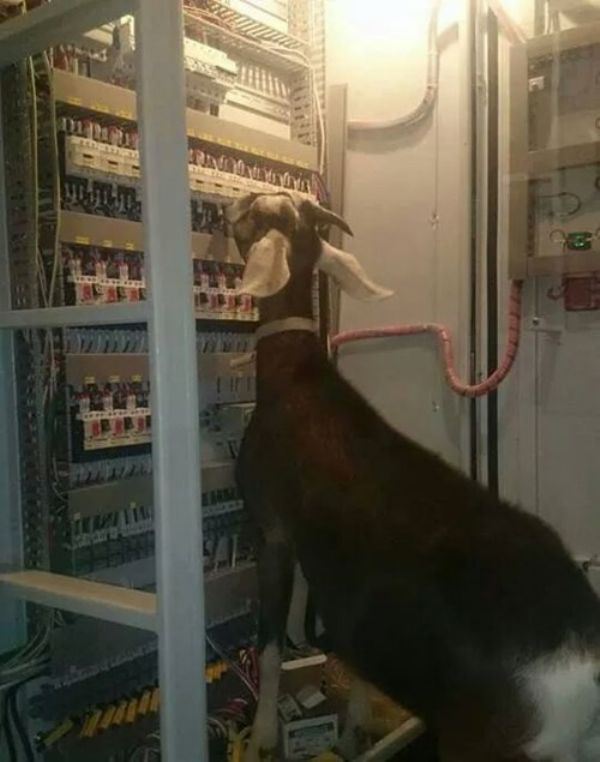
Goat electrician

Pictured: Unsophisticated competition

Unfortunately “little” bids are much less profitable for all of those reasons. High competition drives profit down. If there’s no call for a more sophisticated or established firm, there’s no advantage in being the best. Even a minor error is likely to have dire consequences on low-budget bids. These “quick hitters” end up being strikeouts for the big firms.

If your team of subs isn’t aligned to the scope of work you’re bidding, you’ll have problems hitting market value. Plus it takes and awful lot of small contracts to equal a few “right sized” jobs. The tricky thing about “right-sized” jobs is that it often takes a great deal of work to find them in slow markets. As hard as it may be to believe, the time is better spent finding the right jobs than bidding unprofitable losses.

Getting back to teams, it’s been my experience that few GC’s have a firm grasp on what their key subs are good or bad at. It’s terribly common for GC’s to define subs as either “big” or “small”. Greater understanding can make a huge difference. Lots of GC’s start out with a new sub by having them bid limited scope or low-budget projects. The idea is that the sub will prove themselves on something less risky before they can be invited to the better work. This logic is tragically flawed because a big sub may not be particularly efficient at little projects. Trying to out-bid companies with a fraction of their overhead isn’t reasonable. As a result, a sub who’d be perfectly suited to that GC’s typical project never sees that opportunity because they can’t win the tiny jobs they’re forced to start on.

In the mean time, the GC is losing out on a market-leader sub who could be earning them victories.

GC’s and Subs should strive to understand one another and align themselves to greatest advantage. That requires forthright honesty which isn’t as common as it should be. Marketing pitches have no place here. GC’s should take this information to heart and avoid wasting the subs time on work that’s too small or too big for them to be competitive. Not everyone will align on every job, that’s OK. Subs will be more enthusiastic about bidding to a GC that wins profitable work with them. GC’s shouldn’t expect loyalty to override the subcontractors own interest. In fact, GC’s should pick work that perfectly fits their best team of subs.

Much of “what’s wrong” in the professional estimators day comes down to enduring arbitrary pressure and a tolerance for tedium. It doesn’t have to be all-consuming. Wining profitable work reduces pressure very quickly. Picking an opportunity aligned with the winning team is enormously satisfying for all concerned.

Imagine the farmers neighbors walking home with the new barns shadow over their shoulder. Proud of the accomplishment and secure in the knowledge that there are opportunities more to come.  That’s a worthy accomplishment achieved through proper perspective.


For more articles like this click here

© Anton Takken 2014 all rights reserved


Bid Results

Why you lost a bid, is worth knowing about.

If a bid was a sure-shot at a contract, it wouldn’t require an estimator. Winning a bid is often more than a simple tally of itemized lists. Keeping current on a competitive market has many facets that can each play a role in the final outcome.

housingmarketonthemove

For example; the housing market’s really on the move right now!

Most GC’s benefit from public or quasi-public bid readings which give fairly immediate feedback on who won and by how much. Private bid openings are less transparent but may feature greater feedback since the clients tend to communicate directly with the estimators as they resolve or reconcile differences.

Clients may not recognize the significance of meaningful post-bid feedback. Considering the hundreds of data points in even a simple estimate, it’s desperately frustrating how often that collective effort is distilled into “you lost“. Typically you’ll be told the rankings with an odd percentage thrown in. Something like; “you came in third and the bidders were 16% apart” is not particularly helpful if there were more than three bidders. That means that you lost by something less than 16% of your bid. You can’t always expect clients to tell you how many bidders there were, who they are, or who won.

In fact, it’s entirely possible the client may decide not to award a contract at all. Conceptual bids and projects for under-funded clients have no chance of becoming a job but the client may not choose to share that information beforehand. Everyone is a “loser” as they take the bid feedback to their design team for re-tooling. In some cases, the invitation to bid will have verbiage defining selection criteria that can allow them to hire whoever they want regardless of price and/or qualifications. If a client wants to negotiate with a particular firm, it would be more ethical if they did so without the straw bid.

king maker

“His Eminence will see you now”

Some clients will interview the low two or three bidders prior to making an award decision. In the best of cases, the clients will tell you when you’re not low before the meeting. This gives you a chance to review your work, and prepare your pitch towards closing the gap. Although it may seem counter-intuitive, being told how far you were off is a serious problem. Bid shopping is unethical and in some cases, illegal. It shouldn’t be a surprise that working for someone who cheats, will lead to being cheated.

Preparing for the interview, an estimator should strive to promote the value of their firm’s skill and subcontractor pool. Offering a better service for a higher price is not necessarily a bad deal to the client. An awful lot of GC’s that enjoy negotiated agreements are not able to competitively win hard-bid work. Being best value to a client typically means insulating the client from future change orders and down-time which can be very expensive.

Getting back to bid results, every estimator must strive to pull out as much information as they can. It’s often necessary to interpret what little is provided to determine what went into losing that bid. “Getting a read” on what the client is thinking is sometimes all you’ve really got. GC’s sometimes consult with trusted subs to get the word on the street. A client who “goes silent” or ducks your calls is a warning sign. Estimators who are concerned about “nagging” or “bothering” such a client often see a competitor’s banner go up on site while they wait for their calls to be returned. There might be a legitimate and honest reason for treating a bidder this way, but I haven’t heard it. Bid results are a clients obligation to prove a fair and ethical contract was awarded which is small recompense for what they’ve cost the market.

jackhole

Submitted without comment

Moving beyond just getting data, let’s focus on interpreting data. First off, let’s establish a few general guidelines with roughly define a “typical” bid. Generally speaking a given subcontractor’s proposal will have the following approximate breakdowns.

Material               50%

Tax                        <10% of material

Labor                    50%

Overhead            10%

Profit                    5%


Generally speaking, a GC’s proposal will have the following approximate breakdowns;

Subcontractor’s total       80-90%

General conditions           10-20%

Taxes                                   <10%

Permits                               2-6%

Bond                                    1-3%

Profit                                   <10%

I hasten to add that this is a rough approximation, to be used as a framework for comparison. With that in mind, several data points leap out as relevant. Competing subcontractor bids that are 5% or less apart signals that the competitors are bidding the same scope of work with different profit levels.

When the difference between subcontractor bids exceeds 5%, there’s often a more “structural” difference between the bids. Examples would include a bidder who is substantially larger or smaller than their competition, thereby having different overhead, purchasing power, or manpower costs. Similar contractors with wide-apart bids indicates scope inclusion differences, or a mistake. Without multiple bidders, it’s often difficult to identify which bidder is an outlier and where the trend is.

Hard- bidding firms tend to stratify according to their individual efficiencies of scale. Wins and losses are often tight for the real contenders. Small jobs in tight markets tend to go to bidders who win by mistake.

bad site

I’d like to help you out but it clearly says here in subsection D that the dirt is on fire…”

This end of the spectrum accounts for the majority of business failures.

The entire purpose of bid results is to shed light on what you can do to improve. Huge losses indicate a more systemic problem such as chasing work that’s too big or too small. Many GC’s assume that subcontractors will bid to everyone the same. Still more believe that their “fame” in their local market is sufficient guarantee that all subs will bid to them.

Market leader subcontractors are often very particular about what they’ll bid, and who they’ll bid it to. Bidding to a GC that always loses is a costly exercise that most subs can’t afford. Truly excellent GC’s aren’t that common, so savvy subcontractors strive to be indispensable to those firms.

Shifting perspective slightly, we need to consider a few concepts. Bid results conjure the impression that the entire consideration of the project concluded during the bidding stage. This is typically the case when a GC’s estimator is giving bid results to a subcontractor after the GC lost their bid. Everything changes when the GC wins the job because most firms will have the Project Manager “buy-out” the estimate. In practice the buy-out is an error check of the estimators work. The PM is able to spend significantly more time with the proposals and may even directly interview bidders before making a decision.

After much deliberation and fact-finding, the PM arrives at their decision and their final contract relationships which may be significantly different from the bid-day configuration. It can be difficult for a PM to provide concise bid results to a losing subcontractor when there are several moving parts. Some bidders respond to a loss with bargaining, counter-offers, and bid peddling.

dude stop

Dude stop, you’re just making this awkward for everyone.”

PM’s are very aware that their conversations may be overheard and misunderstood. Listing off subcontractors and their bid amounts might be interpreted as bid-shopping, or collusion. Since much of their stock-in-trade, comes of their finessing how the subcontracts come together for the project, PM’s are reluctant to share the final outcome of their work.

Sadly, this leads to a situation where the winning GC is generally the least forthright bid result a subcontractor can get. By extension, firms who make PM’s estimate their own jobs are virtually impossible to get accurate bid results from.

The PM’s know they can’t afford to give results when they lose because they know they won’t give accurate results when they win. Their default condition tends to be meaningless responses like “you lost”, “it was close”, or “we didn’t win”.

Unless a bidder consistently wins work with that PM, they will quickly find themselves lacking a reason to continue bidding. Disengaged estimating leads to dwindling subcontractor bids.

When pressed for more accurate answers, some PM’s think it’s clever to say “2% difference” because it makes it appear as though the difference was so small that nobody’s really far off. The PM doesn’t want to actually look it up so they give an answer that will get the bidder off their back. Quick and pithy replies like these should tell the bidder that this person doesn’t have enough respect for how costly it is to bid their work. Lying is worse than not answering.


meeting

A Project Manager would call this a 2% difference

While it’s no guarantee, every bid-shopping firm I’ve encountered said I lost a bid “by 2%”. It’s interesting that dishonest people aren’t particularly creative with their lies. Your mileage may vary.

I’ve met owners of GC firms that don’t have dedicated estimators because they figure that they are avoiding the overhead of an estimator by having PM’s bid their own work. Much ado is made of the “error free” transition from bidding to project management.

My counter-argument to this view is that PM’s are rarely ever trained to be successful estimators which is why most of them aren’t. In my experience, very little is lost in transition from Estimating to Project Management. The “errors” mentioned above are often the result of the PM’s careful review of the estimators work. Having a second set of eyes with entirely different priorities reviewing the estimate has the best chance of catching an error. That’s a good thing! PM’s doing their own estimating make mistakes too. They’re in a position to fix them autonomously so it doesn’t get as much publicity.

Bidding PM’s can make mistakes that are even harder to spot. For example, bidders may know an individual PM’s proclivities and bid accordingly. Now that PM becomes part of the subcontractors risk consideration. Many, many, GC’s get different subcontractor pricing depending on which PM’s bidding the job. As a result the difficult PM loses work their firm might have otherwise won. In fact some firms have bidding PM’s that are “black-balled” by subs who won’t bid work with them at all. There’s a penalty for incompetence and making PM’s bid their own work assures the firm will suffer for it. Estimators get good and stay good by staying current. PM’s returning to estimating after 6 months afield are poorly informed of current events. Losing bids costs more than just overhead.

At the subcontractor level, it’s very obvious who’s winning and who’s losing. Bidding PM’s lose more often than dedicated estimators on hard bids. In fact, dedicated estimators are superior to bidding PMs on negotiated agreements as well. Those without dedicated estimators exceed the client’s budget much more often, and take far longer to reach resolution. I have encountered several instances where the cost of PM’s re-bidding to achieve the client’s budget consumed all the GC’s profit for the job!

uhhhyup

“Sparky didn’t see that coming, but he took the news well enough.”

If you’re a bidding PM trying to figure out why you’re struggling to win work, this may explain why. Estimating is about selling an opportunity to be part of a successful team headed up by someone with a master plan that will make everything profitable. Success comes from pulling the best talent together for the best opportunities. Conversely, PM’s use their contracts as cudgels to enforce, extract, and otherwise influence subcontractors to do their bidding. Success comes from pushing subcontractors to perform.

The mindset and the approach are entirely different for good reasons yet few individuals accomplish this shift effectively. Pushing subcontractors to bid will not make you successful against a competitor all the best subs want to work for. Conversely a project won’t get built perfectly just because everyone wants to work with your firm. Without a PM pushing the laggards, a job becomes a liability for everyone. Total project success therefore relies upon the balance of these two disciplines working together.

Bid results are a vital resource for continual improvement. If you’re in a position to provide them its immensely important to your future successes that you get timely, truthful, and accurate answers to your bidders. The people least inclined to provide bid results are the most likely to lose their bids. The market will work around the obstinate like a stone in a river, eroding them over time. The last-minute calls pleading for quotes usually come from folks who don’t give bid results.


For more articles like this click here

© Anton Takken 2014 all rights reserved